How to Read Dog Food Labels When Choosing Kibble

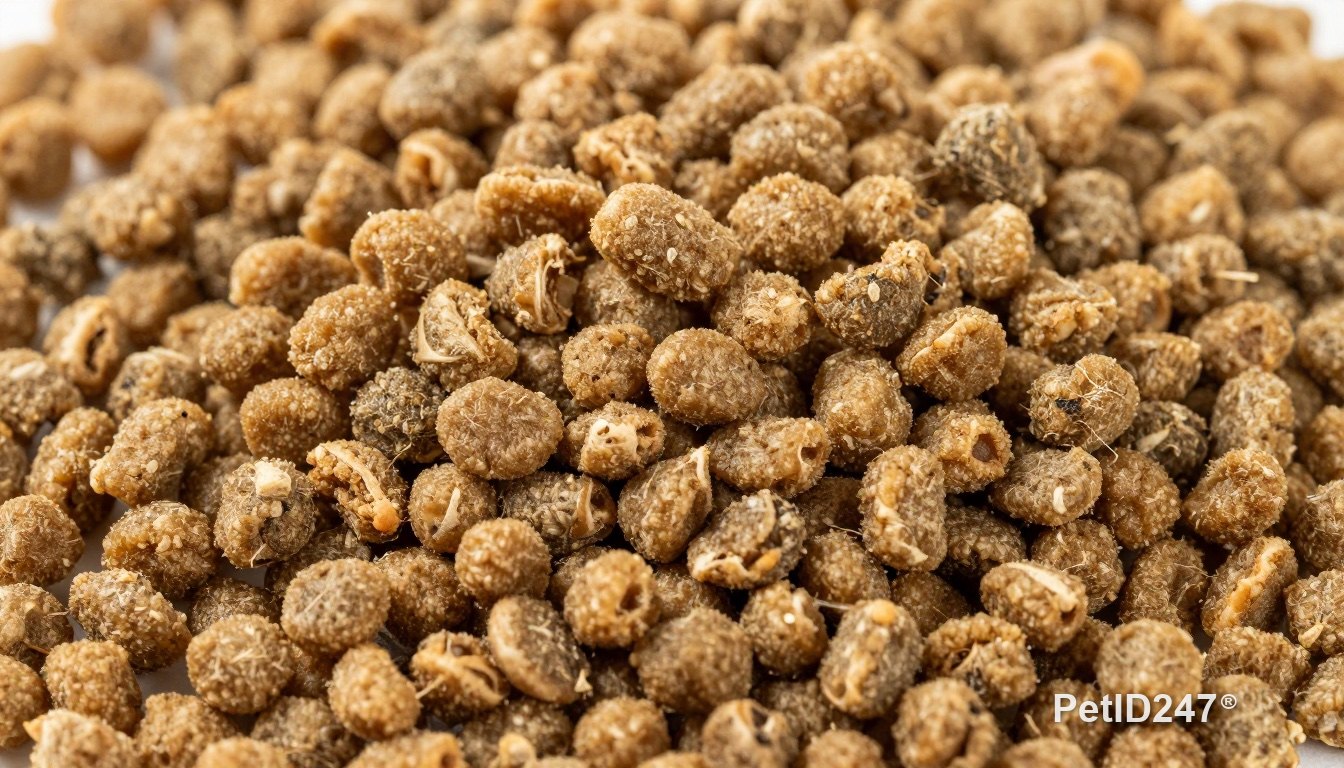
AI-generated illustration
Dog food bags are packed with information, but not everyone knows how to read it. Learn to understand ingredients, the guaranteed analysis and nutritional claims.
Standing in front of the kibble shelf, it's hard to choose when every bag has attractive pictures and tempting marketing claims. The most reliable information is usually on the back of the bag, in small print. Knowing how to read the label helps you pick the right food for your dog.
The nutritional adequacy statement: the first thing to look for
Look for the line stating that the product is "complete and balanced" for a specific life stage. This tells you the food is formulated to be used as a main daily diet. Many products also state that they meet the nutrient profiles of professional bodies such as AAFCO (United States) or FEDIAF (Europe).
- Puppies and pregnant or nursing mothers need food labeled as suitable for growth and reproduction.
- Adult dogs should eat food for adult maintenance.
- "All life stages" means it is adequate for puppies too, so it's usually more energy-dense; watch portions for less active adult dogs.
- Large-breed puppies should eat food labeled as suitable for large breeds, because energy and minerals need to be controlled so their bones develop evenly.
If the bag says it is a treat, a supplemental food, or only for "intermittent feeding", it is not a main diet.
The ingredient list
Ingredients are listed in descending order by weight, measured before processing. A few things worth knowing:
- Fresh meat contains a lot of water, so even when it's listed first, after drying the actual amount may be less than ingredients further down the list.
- "Meat meal" is meat with much of the water and fat removed, and it can still be a good protein source.
- By-products such as liver, heart and kidney are valuable sources of nutrients and don't automatically mean low quality.
- Grains such as rice and oats provide energy and fiber. Most dogs digest grains well once they're cooked.
Don't judge a food by one or two ingredients that "sound good" or "sound scary". The overall quality of the formula is what matters.
The guaranteed analysis
This panel usually lists minimum crude protein and crude fat, and maximum crude fiber and moisture. Remember these are minimums or maximums, not exact figures.
Compare on the same basis
To compare two products with different moisture levels, such as dry kibble and wet food, convert to a dry matter basis. As a guide: divide the nutrient percentage by the dry matter percentage (100 minus moisture), then multiply by 100. For example, a kibble with 24% protein and 10% moisture has roughly 24 divided by 90, times 100, which is about 27% protein on a dry matter basis.
Other information on the bag
- Feeding guide: only a starting point. Actual needs depend on age, activity level, whether your dog is spayed or neutered, and body condition. Adjust gradually based on your dog's weight and body shape.
- Energy content: many bags list calories per kilogram or per cup, which helps you compare when switching foods.
- Expiry date and lot number: choose bags with a long shelf life left and intact packaging that isn't damp or bulging.
- Manufacturer details and contact information, so you can ask questions when needed.
Be wary of marketing terms
Words like "premium", "natural", "organic" or "human-grade" may not have consistent definitions. "Grain-free" food isn't automatically better either. A possible link between some grain-free diets and heart muscle disease in dogs is still being studied, so ask your veterinarian before choosing this type of food.
Summary
- Prefer food labeled "complete and balanced" for your dog's life stage.
- Read the ingredient list as a whole, not just the first word.
- Compare nutrients on a dry matter basis.
- Use the feeding guide as a starting point and monitor your dog's body condition.
- Change food gradually over about 7–10 days.
- Store kibble in a cool, dry place and seal the bag after each use.
For dogs with conditions such as bladder or kidney stones, kidney disease, food allergies or obesity, the diet should be chosen on your veterinarian's advice.
This article was prepared with the help of artificial intelligence tools and reviewed by the PetID247 editorial team before publication. It is for reference only and does not replace an examination by a veterinarian.