Ticks and Fleas on Dogs: Year-Round Prevention

AI-generated illustration
In warm, humid climates ticks and fleas thrive all year. Learn the harm they cause, how to protect your dog consistently and how to clean your dog's living space.
In warm, humid climates, ticks and fleas don't just show up in the rainy season; they can breed almost all year round. Many owners only act when they spot a tick on their dog's ear, and by then there is often a whole colony in the house. Regular, correct prevention is always easier than treating a heavy infestation.
Why ticks and fleas are more dangerous than you think
Ticks and fleas do more than cause itching. They feed on blood and can pass diseases to your dog. Common problems include:
- Tick-borne diseases: ticks can carry blood parasites and bacteria such as Ehrlichia, Babesia and Anaplasma. An infected dog may have a fever, stop eating, seem tired, have pale gums, nosebleeds or small spots of bleeding on the skin.
- Flea allergy dermatitis: just a few bites can make a sensitive dog intensely itchy, scratching until fur falls out, the skin is broken and secondary infections set in, often on the lower back near the tail.
- Tapeworms: dogs can pick up tapeworms by licking and swallowing fleas that carry tapeworm larvae.
- Anemia: puppies, elderly dogs or weak dogs with a heavy infestation can lose a significant amount of blood.
Ticks and fleas can also bite people in the home, so protecting your dog protects the whole family.
Understand the life cycle to prevent them properly
Here is something many people don't realize: most fleas and ticks don't live on the dog itself but in the surrounding environment. Adult fleas lay eggs in the fur; the eggs drop onto floors, tile gaps, bedding and rugs, then hatch into larvae and pupae. Pupae can wait for quite a long time before emerging as new fleas. Ticks leave the dog to lay eggs in wall cracks, corners of the yard and grassy patches, and the young ticks then climb back up looking for a host.
So if you only pick off the few ticks you can see on your dog, the life cycle carries on. Effective prevention needs two things at the same time: continuous protection for the dog and a clean environment.
How to prevent ticks and fleas all year
Use external parasite products as directed
There are many types of products, including spot-on treatments, oral medications, collars, shampoos and sprays. Each has a different protection period, age range and weight range. You should:
- Ask your veterinarian to choose a product that suits your dog's age, weight, health and lifestyle.
- Read the product label carefully and use it only for the right species, the right weight band and at the right interval, as directed by your veterinarian.
- Use it consistently all year; don't stop when your dog seems "tick-free", because ticks can come back from the environment.
- Don't combine several products at once without asking your vet.
An important warning if you also have cats: some tick products made for dogs can cause severe poisoning in cats. Never use a dog product on a cat, and don't let your cat lick the spot where a treatment was just applied to your dog.
Check your dog's body regularly
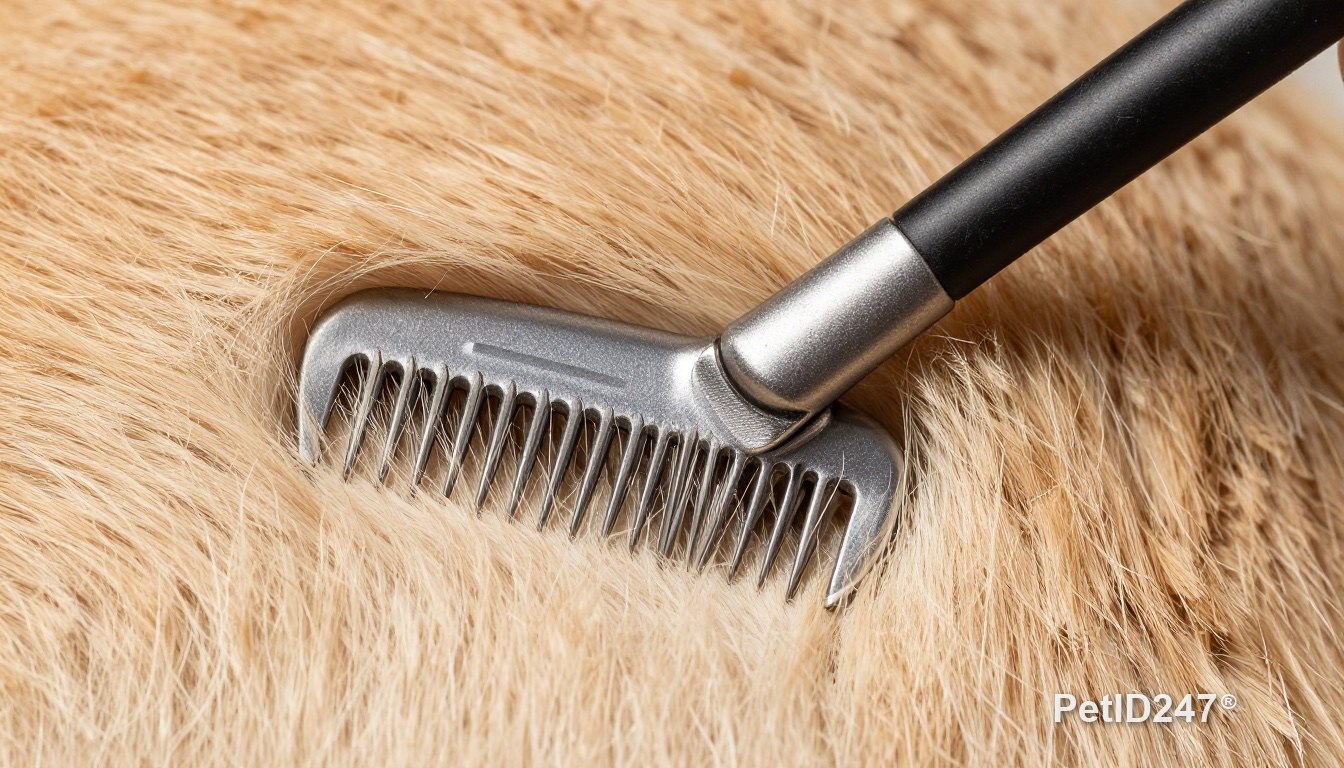
After every walk on grass, in a park or in the countryside, spend a few minutes running your hands over your dog. Pay attention to the places ticks like to attach: in and around the ears, between the toes, armpits, groin, the neck under the collar and around the tail. Use a fine-toothed comb on the back and tail to look for fleas or "flea dirt", tiny black specks that turn reddish-brown when placed on a damp paper towel.
Remove ticks correctly
- Wear gloves and use fine-tipped tweezers or a purpose-made tick removal tool.
- Grip the tick as close to the skin as possible and pull straight up with steady pressure; don't twist or yank.
- Don't crush the tick with your fingers, burn it, or put oil or gasoline on it.
- Disinfect the bite site, wash your hands well and keep an eye on that patch of skin for a few days.
Clean your dog's living space
The environment is where most ticks and fleas hide, so don't skip this step:
- Regularly wash your dog's bedding, blankets and fabric toys in hot water and dry them in the sun.
- Vacuum floors, rugs, sofas and corners often; empty the vacuum bag or canister outside straight away.
- Mop floors and seal or thoroughly clean cracks in walls and baseboards where ticks like to lay eggs.
- Keep grass short and clear away rotting leaves and discarded items in the yard.
- If the infestation is heavy, ask your veterinarian how to treat the environment safely for people and pets.
All dogs and cats in the household need to be protected at the same time. If you only treat one animal, the others become a source of reinfestation.
When to see a vet
Take your dog to a veterinarian promptly if you notice:
- Fever, tiredness or loss of appetite after your dog has had ticks.
- Pale gums, nosebleeds, spots or patches of bleeding on the skin, or dark urine.
- Constant scratching, patchy hair loss, red skin, oozing or a bad smell.
- Rice-like tapeworm segments around the anus or in the stool.
- Any unusual reaction after using a tick product, such as trembling, drooling, vomiting or wobbly walking.
Tick-borne diseases sometimes progress silently, so regular check-ups and blood tests when your vet recommends them are a good way to catch problems early.
This article was prepared with the help of artificial intelligence tools and reviewed by the PetID247 editorial team before publication. It is for reference only and does not replace an examination by a veterinarian.