Choosing Safe Toys and Perches for Your Parrot
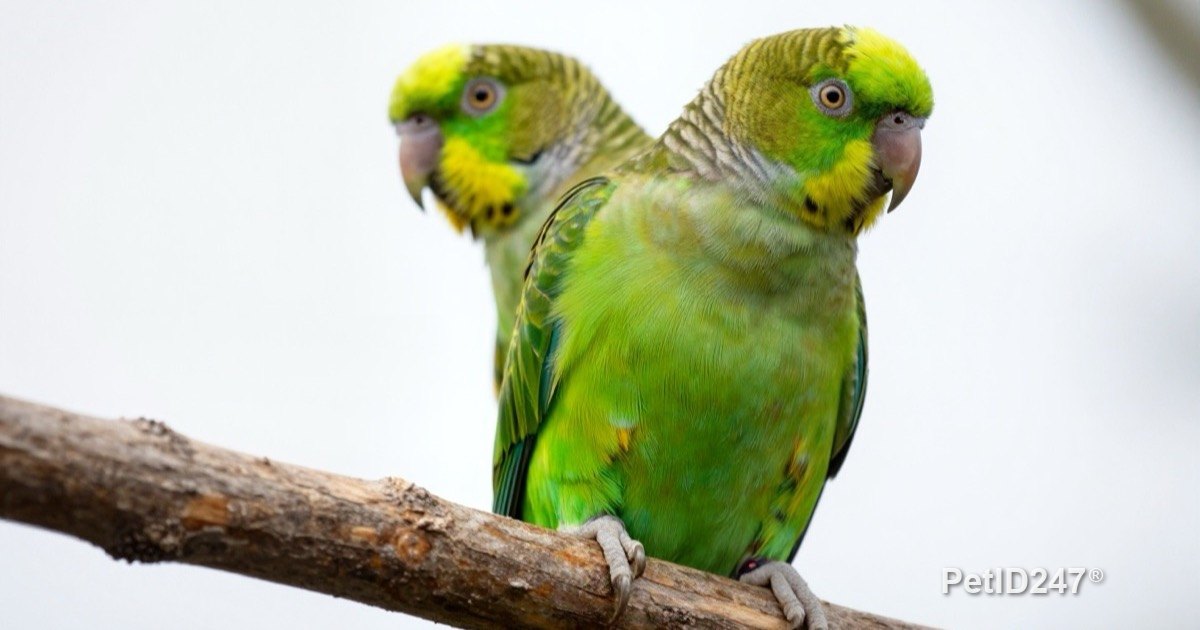
AI-generated illustration
Parrots stand on perches almost all day and need toys to chew, shred and forage. How to choose perches that are good for their feet and safe toys that avoid metal poisoning.
Parrots spend nearly their whole lives standing on perches, and most of their waking hours chewing, shredding and exploring. The wrong perches can leave feet sore and ulcerated. Poor-quality toys can cause metal poisoning or trap a bird. Choosing well from the start keeps your parrot healthy and reduces problem behaviors caused by boredom.
Perches: the foundation for healthy feet
Why you need different sizes
If a parrot stands all the time on smooth, round perches of the same size, pressure falls on the same few points under the foot. Over time, the skin there becomes red, thin and then ulcerated. Good perches should be:
- Varied in diameter within the same cage, so the feet flex in different ways.
- Right for the foot size: when standing, the toes wrap around most of the perch but don't meet all the way around it.
- Natural and slightly uneven, like real branches with bark and knots.
Perch materials
- Natural wood branches from bird-safe trees, unsprayed, washed and dried: the best choice.
- Cotton rope perches: soft on the feet, but replace them when they fray, since long fibers can tangle toes or be swallowed.
- Flat platforms: give feet a rest, especially for older birds.
- Avoid or limit sandpaper-covered perches: they don't trim nails as well as claimed and can scrape the soles.
- Smooth plastic perches should be used sparingly, not as the main perch.
- Don't use roadside branches or wood of unknown type, which may carry chemicals or toxic sap.
Arranging perches in the cage
- Never place perches directly above food or water bowls, so droppings don't fall in.
- Place perches at different heights and leave room for your bird to spread its wings and hop short distances.
- Keep the highest perch away from the cage roof so the tail and crest don't touch it.
- Don't overfill the cage with perches and toys so there's no room to move.
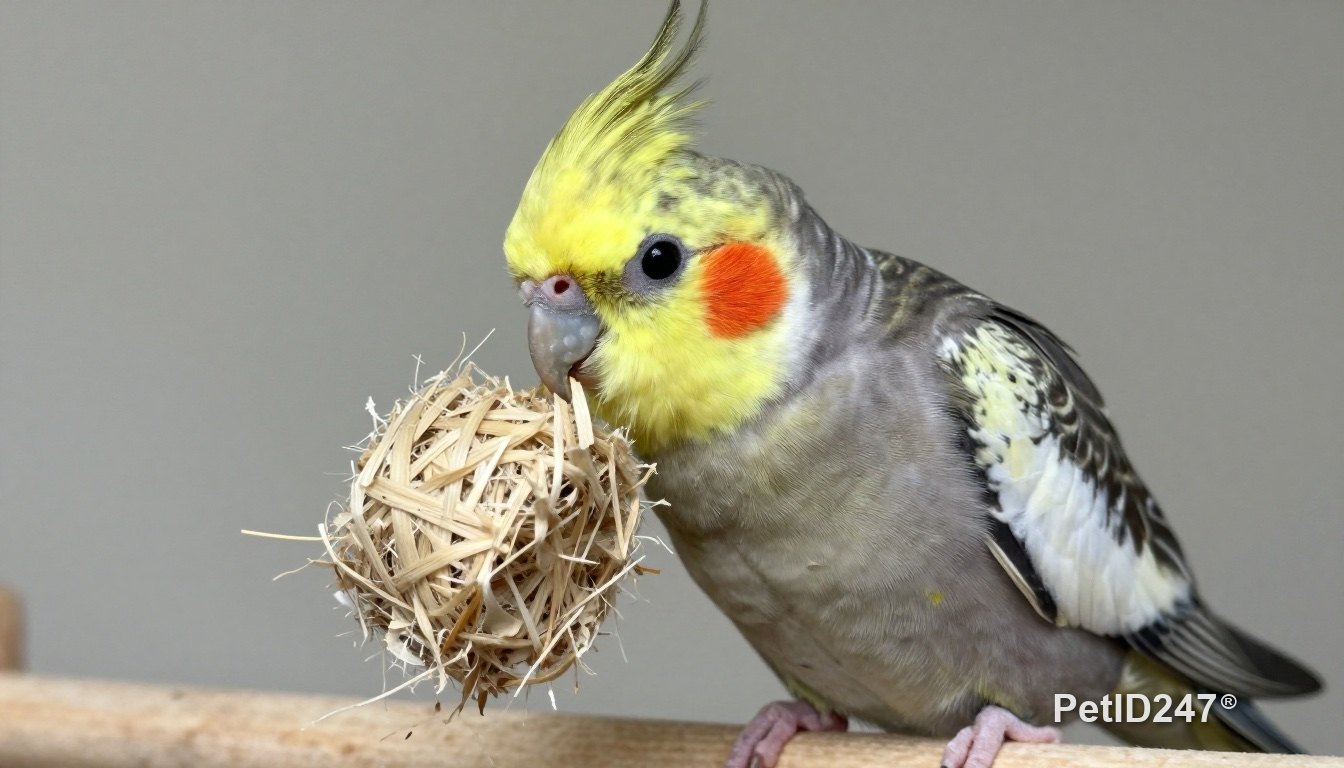
Toys: what parrots need
Wild parrots spend many hours a day foraging, stripping bark and shredding leaves. In a cage, toys stand in for those activities. Offer a mix of:
- Chew and destroy toys: safe soft wood, plain cardboard, ink-free paper, dried palm leaves and natural woven grass.
- Foraging toys: paper boxes or cups with treats hidden inside; greens tucked into scrunched-up paper.
- Activity toys: swings, ladders and climbing ropes.
- Puzzle toys: good for larger, clever parrots.
Rotate toys every few days. New things can frighten a parrot at first: place a new toy near the cage for a few days so your bird gets used to seeing it before you hang it inside.
Dangerous toys to avoid
- Metal containing lead or zinc: cheap bells, plated hooks and chains, old paint. Chewing them can cause heavy-metal poisoning.
- Bells with removable clappers, which a parrot can pull out and swallow.
- Open rings and loops the size of a bird's head, neck or foot, which can trap it.
- Long or frayed fibers: nylon rope and frayed fabric that can wrap around toes or the neck.
- Thin plastic that breaks into sharp pieces, especially with large, strong-beaked parrots.
- Mirrors for some small parrots: they may bond too strongly with the "bird" in the mirror, regurgitating food or showing breeding behavior. Watch the reaction and remove the mirror if anything seems off.
- Painted wood, particleboard, glued wood and dyed items of unknown origin.
Regular checks and cleaning
- Check perches and toys weekly for fraying, broken pieces, loose hooks and rust.
- Wash perches in hot water, scrub off droppings and dry them completely before reuse. Damp perches can grow mold.
- Keep a spare set of perches to use while the old ones are being cleaned.
- Replace toys that have been mostly destroyed. For a parrot, a destroyed toy is a toy that did its job.
- Check your parrot's feet weekly: pink soles with an even texture are a good sign.
When to see a vet
- The soles are red, thin and shiny, swollen, scabbed or ulcerated; your parrot often stands on one foot or limps.
- A foot or the neck has been caught in a toy, or there is a wound.
- You suspect your parrot swallowed metal, plastic or string.
- Your parrot is lethargic, vomits, has abnormal droppings, drinks a lot or is wobbly after chewing metal items. These can be signs of heavy-metal poisoning.
This article was prepared with the help of artificial intelligence tools and reviewed by the PetID247 editorial team before publication. It is for reference only and does not replace an examination by a veterinarian. How we write our articles