Caring for a Mother Dog and Newborn Puppies
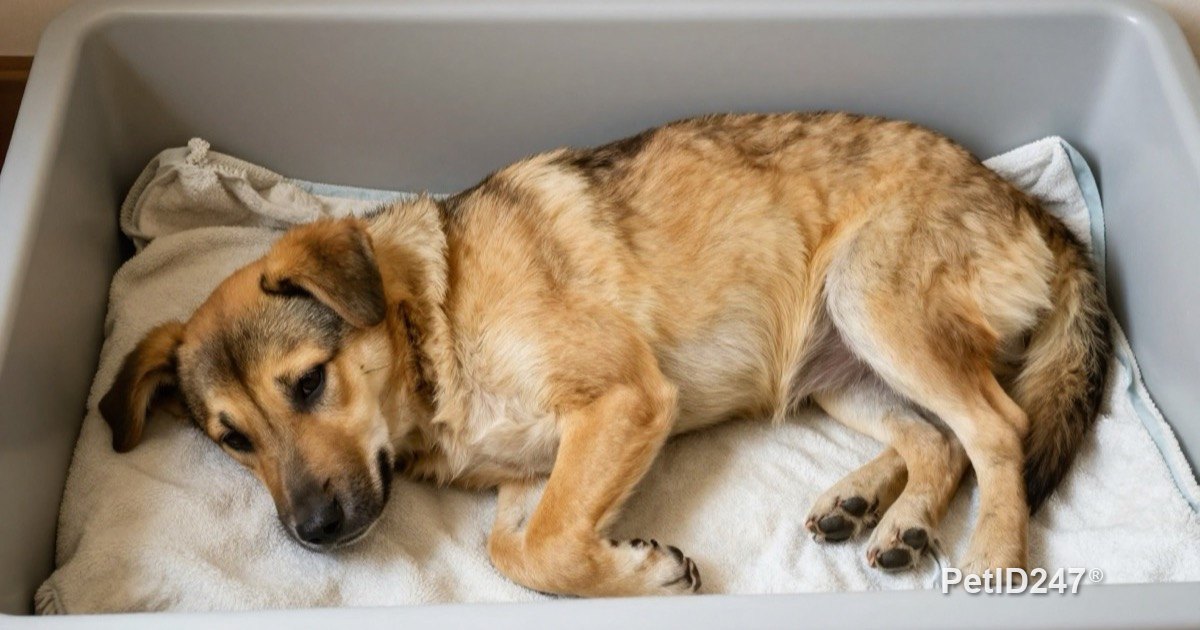
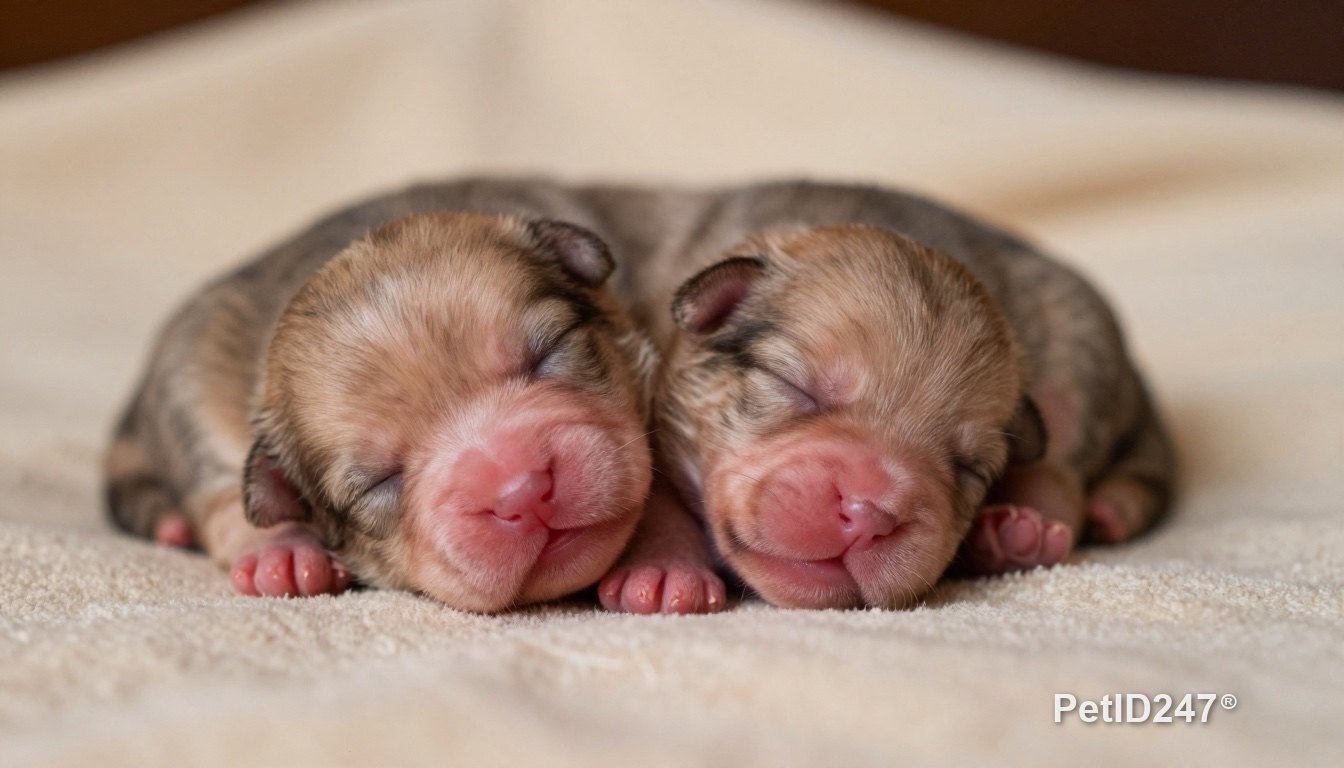
AI-generated illustration
The first weeks after birth shape the health of both mother and puppies. Learn how to keep them warm, check nursing, weigh puppies and spot warning signs.
Newborn puppies can't keep themselves warm, can't see or hear, and depend entirely on their mother. The mother has just been through labor and needs plenty of food and rest to produce milk. Your job is to provide a safe environment, watch closely and spot problems early.
Keep the nest warm and clean
Newborn puppies get cold very easily. A chilled puppy nurses poorly, weakens and becomes more prone to illness. Keep these points in mind:
- Keep the whelping box in a warm, draft-free place. As a common guide, the temperature around the box is about 29–32°C (84–90°F) in the first week, then lowered gradually over the following weeks. Treat these figures as a reference only.
- If you use a heat lamp or heat pad, warm only part of the box so puppies can crawl to a cooler area if they get too hot. Secure it firmly and keep cords out of chewing reach.
- Watch how the litter lies: puppies piled tightly together and crying a lot are usually cold; puppies spread far apart and breathing fast may be too hot.
- Change the bedding daily or whenever it gets dirty. The mother usually cleans the puppies, but the box still needs to stay dry.
Monitor nursing and weight
In the first hours after birth, puppies need to drink their mother's first milk (colostrum). Colostrum contains antibodies that help protect puppies against disease in their first weeks of life.
- Check that every puppy is nursing. Weaker puppies may be pushed aside by their littermates; you can gently place them on a nipple.
- Healthy puppies usually nurse and then sleep, cry little, have nicely rounded bellies and wriggle strongly when picked up.
- Weigh each puppy daily at the same time on a kitchen scale and record it. Healthy puppies usually gain weight steadily. A puppy that isn't gaining or is losing weight should be seen by a vet early.
- Mark each puppy with a soft fabric collar in a different color so you can track them easily.
For the first few weeks, the mother licks the puppies' bellies and bottoms to stimulate them to pee and poop. If she doesn't, ask your veterinarian how to help.
Caring for the mother after birth
Food and rest
- A nursing mother needs much more energy than usual. Vets often recommend feeding a puppy food, in several meals or with food left available.
- Place fresh water and food near the box so she doesn't have to leave her puppies for long.
- Keep the area quiet and limit visitors and other pets. A disturbed mother may become stressed, neglect her puppies or turn protective and aggressive.
What to watch for in the mother
- Vaginal discharge: a reddish-brown discharge for a few weeks after birth is usually normal. Foul-smelling or pus-like discharge, or heavy fresh bleeding, is not.
- Mammary glands: check them daily. Hard, hot, red or purplish glands that hurt when touched may indicate mastitis.
- Low blood calcium (eclampsia, or "milk fever"): most common in the first few weeks of nursing, especially in small dogs with large litters. Signs include restlessness, panting, trembling, stiff walking and seizures. This is an emergency.
Don't give the nursing mother any medicine or supplement on your own. All medicines should be given as directed by your veterinarian, since some substances can pass through the milk to the puppies.
Puppy development milestones
- Around 10–14 days: the eyes begin to open, followed gradually by the ears.
- Around 3 weeks: puppies start standing, taking wobbly steps and exploring the box.
- From about 3–4 weeks: you can start introducing soft food in preparation for weaning.
Talk to your veterinarian early about deworming and vaccination plans for the litter.
When to see a vet
Contact your veterinarian right away if:
- A puppy won't nurse, cries constantly, feels cold, is limp or isn't gaining weight.
- A puppy has diarrhea, vomits, struggles to breathe or has milk coming out of its nose while nursing.
- The mother trembles, pants, walks stiffly or has a seizure, even briefly.
- The mother has a fever, stops eating, or has foul-smelling discharge or heavy bleeding.
- Her mammary glands are swollen, hot or discolored, or she refuses to let the puppies nurse.
Newborn puppies can decline very quickly, so don't wait a few more days to see what happens when something seems wrong.
This article was prepared with the help of artificial intelligence tools and reviewed by the PetID247 editorial team before publication. It is for reference only and does not replace an examination by a veterinarian.