How to Brush Your Dog's Teeth at Home

AI-generated illustration
Dental disease is very common in adult dogs. Regular brushing at home is the simplest way to keep breath fresh and gums healthy, and to help prevent tooth loss.
Bad breath in dogs isn't normal; it is often an early sign of dental disease. Tartar that builds up over time leads to gum inflammation, pain, loose teeth and tooth loss. The good news is that you can prevent most of these problems by brushing your dog's teeth at home.
Why brush your dog's teeth
After eating, plaque forms on the surface of the teeth. If it isn't cleaned off, the plaque hardens into yellowish-brown tartar, often easy to see on the canines and back molars. Bacteria in plaque make the gums red, inflamed and prone to bleeding, then gradually destroy the tissue that holds the teeth in place.
Dental disease causes more than bad breath. A dog with sore teeth may eat slowly, chew on one side or refuse hard food. Long-term infection also affects overall health. Small breeds are often more prone to dental disease because their teeth are crowded together.
What you'll need
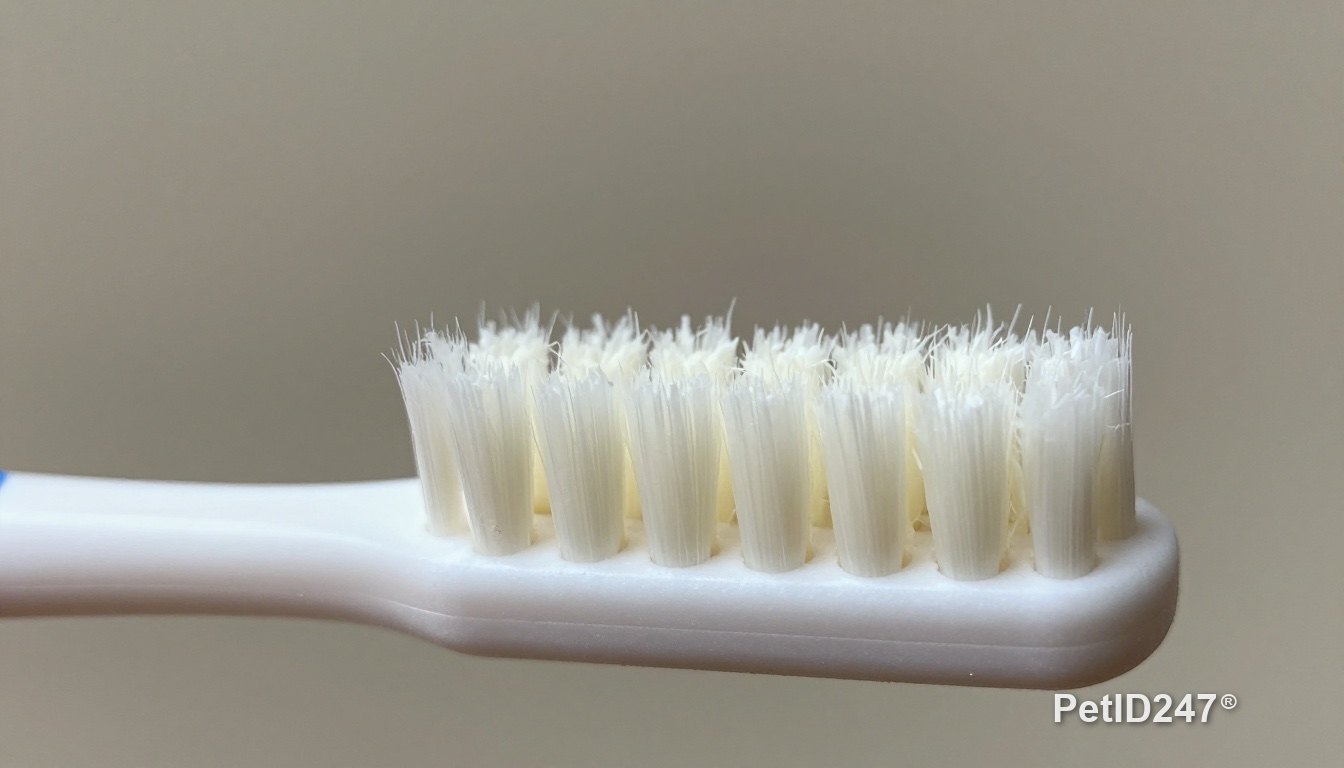
- A dog toothbrush: soft bristles, a small head and a long handle, or a finger brush to help your dog get used to it. For very small dogs, a soft children's toothbrush can work.
- Dog toothpaste: this is a must. Never use human toothpaste, as many contain fluoride and foaming agents, and some contain xylitol, which is highly toxic to dogs. Dogs swallow toothpaste rather than rinsing and spitting like we do.
- A reward: praise, petting or a favorite game right after each brushing session.
Step-by-step: teaching your dog to accept brushing
Don't rush. Spread the process over many days, keep each session to just a few minutes, and stop before your dog gets uncomfortable. Choose a time when your dog is relaxed, such as after a walk.
- Get your dog used to having its mouth touched: for the first few days, gently stroke around the muzzle, lift the lips for a few seconds, then reward.
- Let your dog taste the toothpaste: put a little on your fingertip and let your dog lick it. Most dog toothpastes come in flavors dogs enjoy.
- Rub your finger over the teeth: put toothpaste on your finger, lift the lip and gently rub the outer surface of a few front teeth.
- Switch to the toothbrush: once your dog is comfortable, use the brush with toothpaste, angled at about 45 degrees toward the gum line, and brush in small circles.
- Gradually cover more teeth: move from the incisors to the canines and then to the back molars, where tartar tends to build up most. Focus on the outer surfaces; the inner surfaces are partly cleaned by your dog's tongue.
- Reward after every session so your dog looks forward to the next one.
Ideally, brush every day. If that isn't possible, aim for at least a few times a week. Brushing regularly matters more than brushing for a long time.
Dos and don'ts
- Do stay calm and cheerful. If your dog struggles, go back a step in the training.
- Do check your dog's mouth every week: gum color, tartar, broken teeth and sores.
- Don't hold your dog down tightly or pin it to brush its teeth; it will become fearful and resist even more.
- Don't brush hard; a dog's gums are as easily damaged as ours.
- Be careful with very hard chews such as cooked bones, antlers and rock-hard toys, which can break teeth. Some dental chews and dental diets can help, but they don't replace brushing.
- Don't scrape tartar off at home with metal tools. Tartar below the gum line can only be removed at a veterinary clinic, usually under anesthesia so it can be done thoroughly and safely.
When to see a vet
Have your veterinarian check your dog's mouth if you notice:
- Very bad breath despite regular brushing.
- Thick tartar, or red, swollen or bleeding gums.
- Loose, broken or discolored teeth.
- Chewing on one side, dropping food, refusing hard food, or rubbing the face or pawing at the mouth.
- Swelling on the cheek or below the eye, heavy drooling, or blood in the saliva.
- A puppy that has finished teething but still has baby teeth next to its adult teeth.
Ask your veterinarian to check your dog's teeth at every routine health check. They will tell you when your dog needs a professional dental cleaning.
This article was prepared with the help of artificial intelligence tools and reviewed by the PetID247 editorial team before publication. It is for reference only and does not replace an examination by a veterinarian.