Guppies for Beginners: Keeping Them Healthy
AI-generated illustration
Guppies are colorful, adaptable and breed very quickly. Learn how to set up the tank, feed them, choose a male-to-female ratio and care for the fry.
Guppies are a familiar choice for many people new to fishkeeping. They are small, peaceful, brightly colored and quite adaptable. Still, "easy to keep" doesn't mean you can drop them in a jar of water and forget about them. This guide helps you prepare properly so your guppies stay healthy, show good color and don't get overwhelmed by their own rapid breeding.
Getting to know guppies
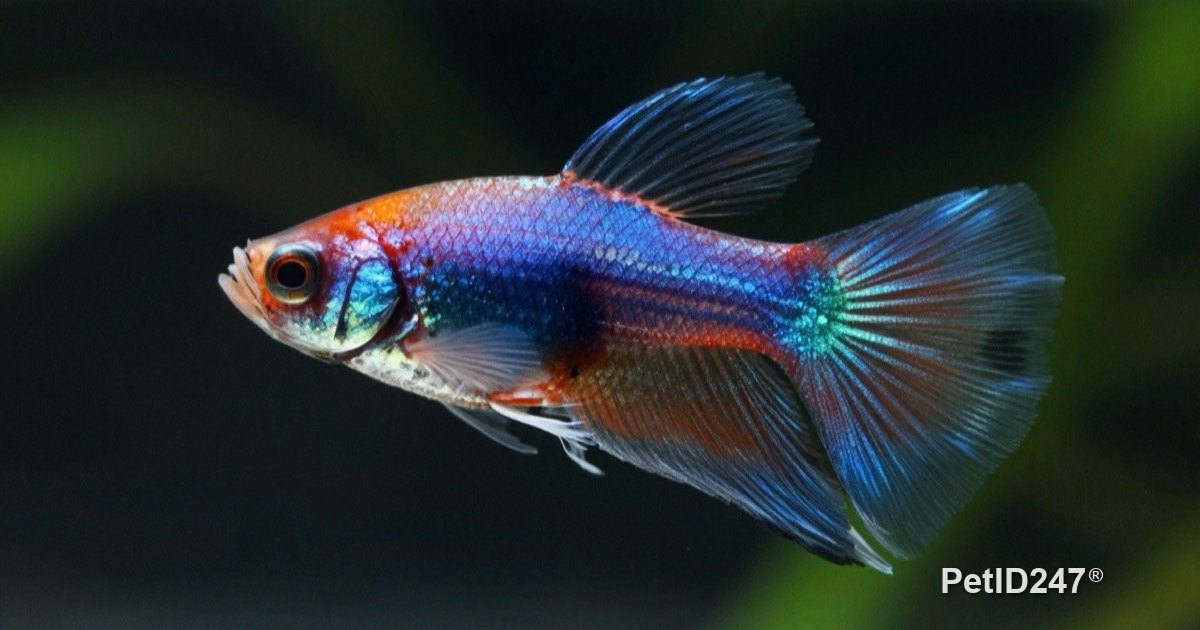
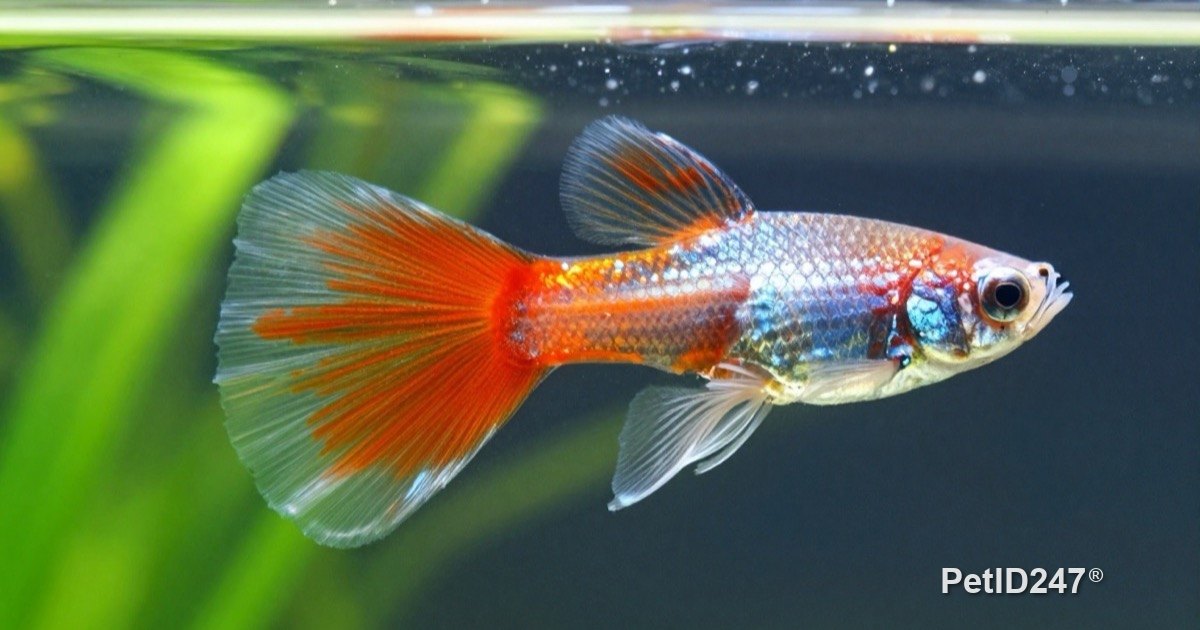
- Males: smaller and slimmer, with large flowing tails and fins in vivid colors. The male's anal fin is modified into a pointed, rod-like organ.
- Females: larger with rounder bellies, usually paler colors and smaller tails.
- Live-bearing: guppies don't lay eggs; they give birth to fry that can swim right away. A female can produce several broods in a row after a single mating.
- Temperament: peaceful, enjoy swimming in groups, and are most active in the middle and upper levels of the tank.
Setting up the tank
Tank size
Guppies are small but breed quickly, so your group will grow within a few months. A filtered tank of a few dozen liters or more is a sensible start, as a guide. The bigger the tank, the more stable the water and the easier it is for a beginner. Don't keep guppies in a small bowl without a filter.
Equipment and layout
- A gentle filter: a sponge filter or a filter with moderate flow. Strong currents tire long-finned males and can suck in fry.
- Stable temperature: guppies are tropical fish. As a common guide, approximately 22–28°C (72–82°F) is suitable. In cold seasons you may need a heater with a thermostat.
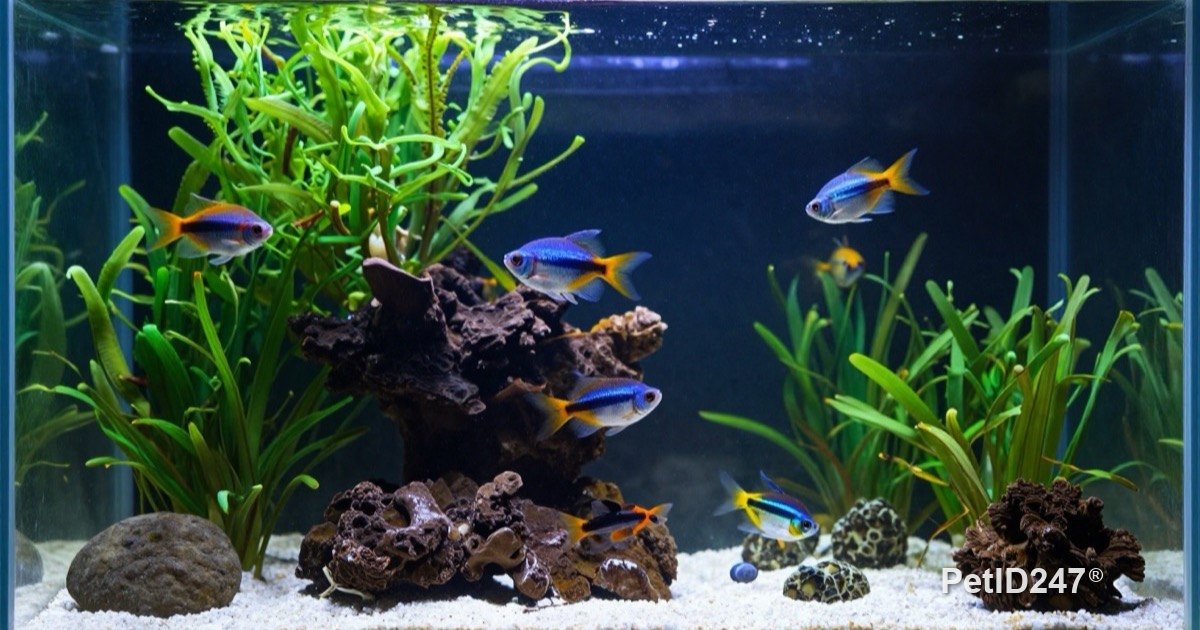
- Live plants: mosses, fine-leaved plants and floating plants give fry places to hide and help keep the water stable.
- Lighting: run the light on a regular schedule and switch it off at night.
- A lid: guppies can jump out of the tank.
Like any aquarium, a guppy tank needs to be cycled before adding fish. See our articles on the nitrogen cycle and on water changes for more.
Choosing fish and the male-to-female ratio
When buying, choose fish that swim actively with open, unclamped fins and bodies free of white spots, red marks or cottony fungus. Avoid buying from tanks with dead or sluggish fish.
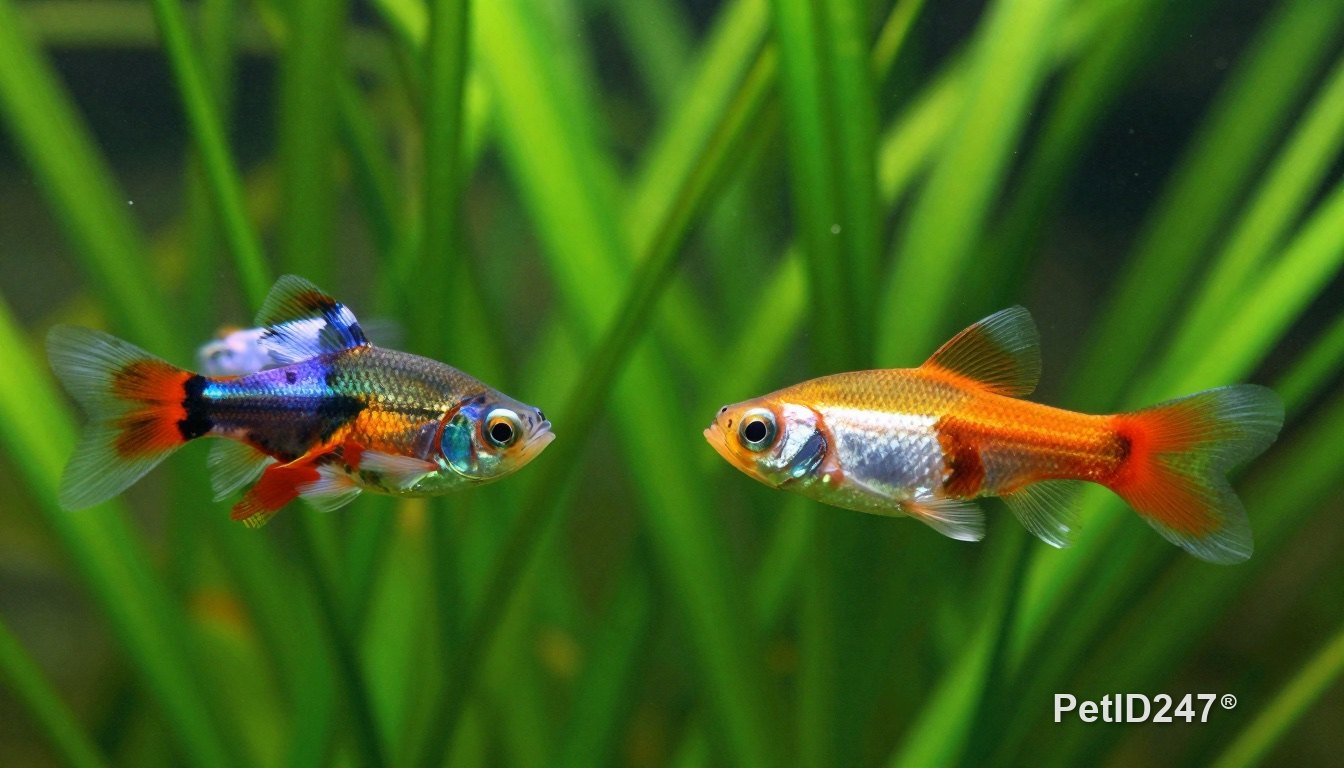
Males constantly chase females. If there are too many males, the females are harassed nonstop and become stressed. Common approaches:
- Keep roughly one male to two or three females, as a guide, if you are happy for them to breed.
- Keep males only if you want to enjoy the colors without breeding. Males usually live peacefully together in a roomy tank.
Feeding and care
Feeding
- Use flakes or small granules made for small tropical fish.
- You can add frozen foods or clean live foods from a reliable source a few times a week.
- Feed small amounts that the fish finish within a few minutes, once or twice a day. Overfeeding is the leading cause of dirty water.
Caring for fry
Adult guppies may eat their fry. To keep the fry, plant dense vegetation or move them to a separate tank. Fry need very fine food in several small meals a day. Plan ahead for what you will do with all the fry: share them with other hobbyists or move to a bigger tank. Never release aquarium fish into natural ponds, lakes or canals, as they can become invasive and harm local ecosystems.
Tank maintenance
- Change part of the water regularly, usually about 20–30% per week as a guide, using dechlorinated water at the same temperature as the tank.
- Vacuum debris from the bottom and trim dead plant leaves.
- Keep guppies with other small, peaceful fish. Avoid fin-nippers and larger fish that might eat guppies.
Summary
Guppies are beautiful, peaceful fish that suit beginners when kept in a tank with gentle filtration, a stable temperature and plenty of plants. Feed sensibly, change water regularly, and choose a sensible male-to-female ratio or keep males only to control breeding. Never release fish into the wild. If your guppies show white spots, ragged fins, sluggish swimming or gasping at the surface, check the water quality first and consult someone with ornamental fish expertise.
Starting with a small group, watching your fish every day and keeping a log of water changes will help you learn tank care faster and give you confidence when you want to keep other species.
This article was prepared with the help of artificial intelligence tools and reviewed by the PetID247 editorial team before publication. It is for reference only and does not replace an examination by a veterinarian.