Weaning Puppies: When to Start and How to Do It
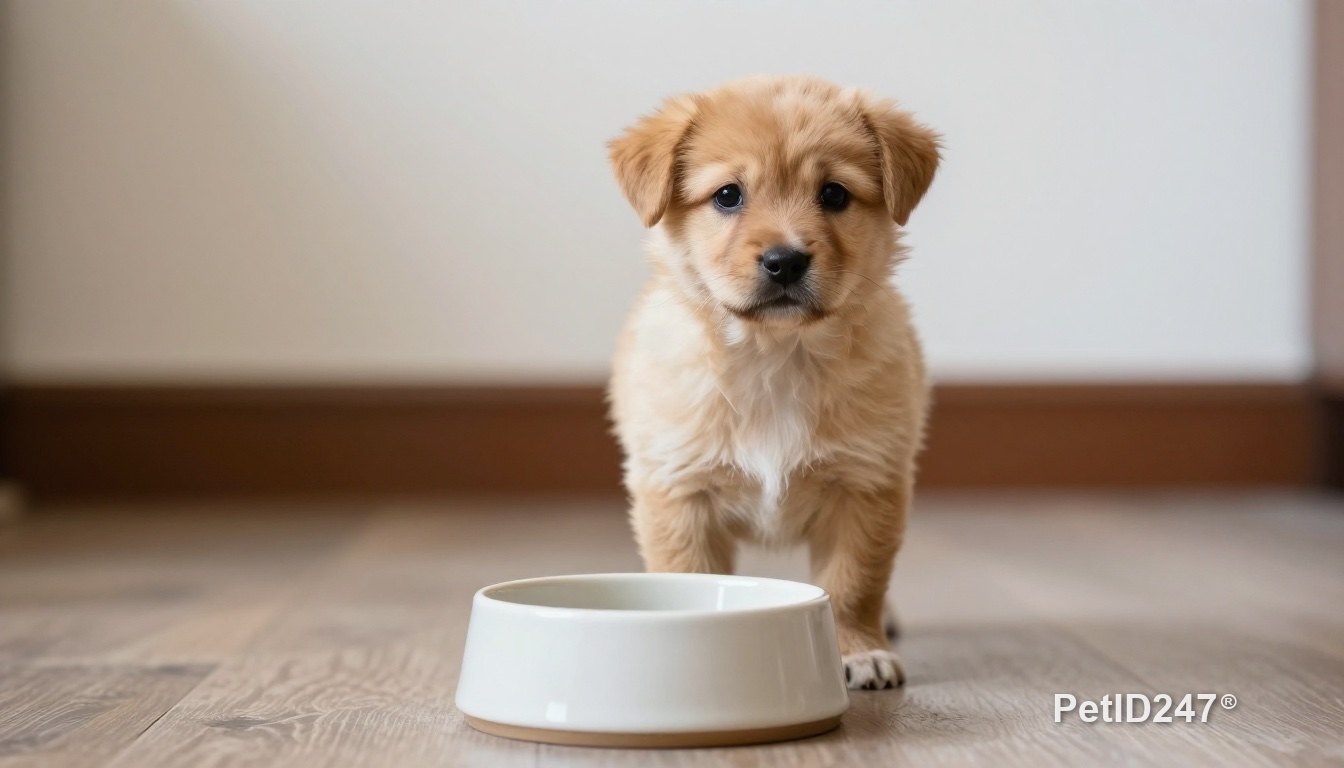
AI-generated illustration
Weaning should be gradual, starting at around 3–4 weeks old. Learn how to introduce food, choose the right diet, monitor puppies and care for the mother.
Weaning is the process of puppies gradually moving from their mother's milk to solid food. Doing it too early or too suddenly can cause diarrhea, weight loss and stress. Done slowly and at the right time, it is easier on both the puppies and their mother.
When to start weaning
As a common guide, puppies can start trying soft food from around 3–4 weeks of age, when their baby teeth begin to come through and they are steadier on their feet. Weaning usually takes several weeks and is complete at around 7–8 weeks. These milestones are for reference only; each litter may be a little earlier or later.
Signs puppies are ready:
- Baby teeth are coming in, and the mother starts avoiding long nursing sessions.
- Puppies are curious about the mother's food bowl, sniffing or licking her food.
- Puppies stand, walk steadily and play more.
Even once they are eating, puppies should stay with their mother and littermates until at least around 8 weeks old. This is when they learn manners, bite inhibition and how to communicate with other dogs. Check the rules where you live on the minimum age for rehoming puppies.
Step-by-step gradual weaning
- Make a soft gruel: mix puppy food with warm water or a milk replacer made for puppies, mashed to a thin, porridge-like texture. Don't use cow's milk, as many puppies struggle to digest it and get diarrhea.
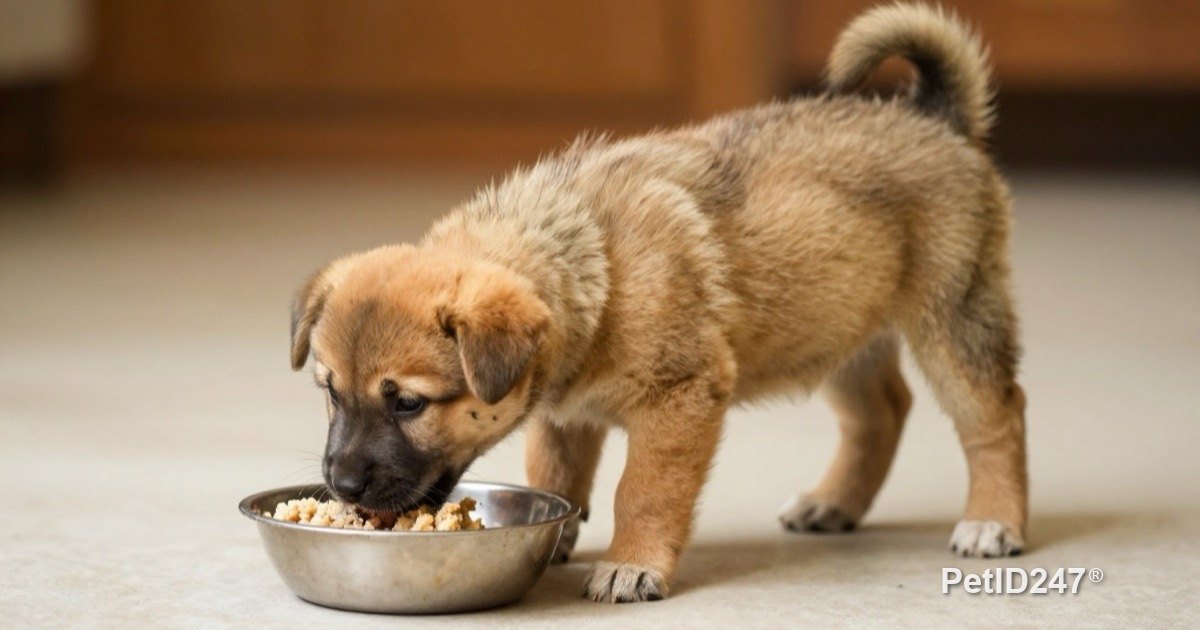
- Introduce it: put a wide, shallow bowl on the floor and let the puppies lick it. You can dab a little on a puppy's lips. At first they will step in the bowl and eat very little, which is normal.
- Thicken it gradually: week by week, use less water so the food gets thicker, until the puppies eat food that is only slightly moist, then dry.
- Feed several meals: puppies have small stomachs, so offer several small meals a day.
- Gradually cut nursing time: give the mother her own resting spot that the puppies can't climb into, so she can naturally nurse less often.
Choosing food and monitoring the puppies
The right food
- Choose food clearly labeled for puppies, complete and balanced for growth. You can also read our article on how to read dry food labels on this blog.
- If you want to cook at home, ask your veterinarian for a balanced recipe, since puppies are very sensitive to nutrient deficiencies or excesses.
- Don't feed bones, seasoned leftovers, onion, garlic, chocolate or other foods toxic to dogs.
- Always provide clean water in a shallow, stable bowl that puppies can't tip over.
Health monitoring
- Keep weighing the puppies regularly. Healthy puppies continue to gain weight steadily during weaning.
- Check their stools: slightly soft stools when changing food can happen, but ongoing diarrhea is not normal.
- Watch for slow eaters that get pushed aside by littermates. You can feed them from a separate bowl.
- Deworming and vaccinations often begin around this time; follow the schedule your veterinarian sets.
Caring for the mother during weaning
As the puppies eat more and nurse less, the mother's milk supply naturally decreases. You can gradually reduce her food back to normal amounts as your veterinarian advises. Check her mammary glands daily, because weaning too abruptly can leave them engorged and prone to inflammation.
When to see a vet
Contact your veterinarian if:
- A puppy has ongoing diarrhea, bloody stools or repeated vomiting.
- A puppy stops eating, is lethargic, loses weight or isn't gaining weight.
- A puppy has a swollen, bloated belly along with thinness and a dull coat.
- A puppy coughs, has a runny nose or struggles to breathe, especially after eating.
- The mother's mammary glands are hard, hot or discolored, or she has a fever or stops eating.
Puppies this young are small and dehydrate easily, so if something seems wrong, see a vet early rather than treating at home.
This article was prepared with the help of artificial intelligence tools and reviewed by the PetID247 editorial team before publication. It is for reference only and does not replace an examination by a veterinarian.