Puppy Chewing Everything? Teach It to Chew Right
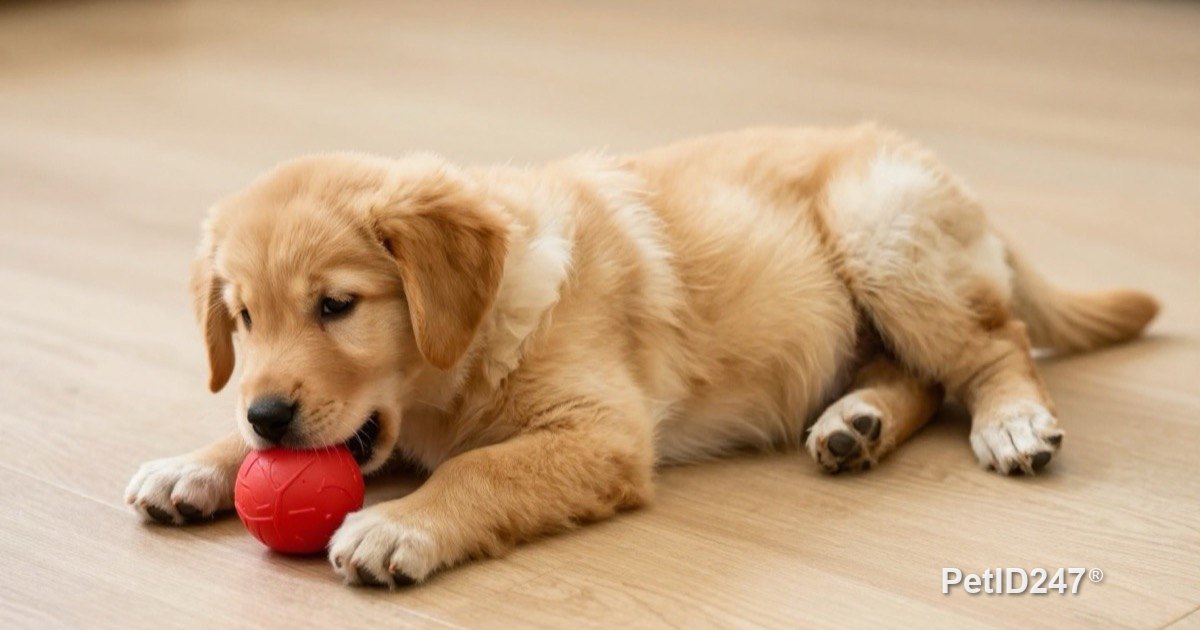
AI-generated illustration
Puppies chew shoes and table legs because they explore and teethe. Learn how to redirect chewing to suitable toys without scolding.
Shredded slippers, a frayed sofa corner and a chewed-through charging cable are familiar sights in many homes with a new puppy. Puppies don't chew because they are naughty or trying to annoy you. Chewing is how they explore the world, and you can absolutely teach them to chew the right things.
Why puppies chew everything
Puppies don't have hands. Their mouth is the main tool they use to find out whether something is hard or soft, edible or not. There are a few other common reasons too:
- Teething: from roughly 3 to 6 months of age, baby teeth fall out and adult teeth come through. Itchy, sore gums make puppies want to chew even more.
- Boredom: puppies have lots of energy. Without enough play and exercise, they find their own entertainment.
- Attention seeking: if chewing a slipper makes the whole family come running, the puppy learns that slippers bring attention.
- Anxiety: some puppies chew more when left alone or when their surroundings change.
Understanding the reason helps you choose the right response. The goal isn't to stop chewing altogether, but to show your puppy what it may chew and what it may not.
Puppy-proof your home first
The fastest way to limit damage is to remove the chance to chew the wrong things. Look at your home from a puppy's height and tidy up:
- Put shoes, clothes and children's toys in cupboards or on high shelves.
- Lift electrical and charging cables out of reach or run them through cable covers. Chewing a live wire can burn the mouth and can be life-threatening.
- Keep medicines, cleaning chemicals, batteries and small swallowable objects out of reach.
- Use a baby gate or a roomy pen to limit where your puppy can go when you can't supervise.
Until your puppy is reliable, don't let it roam the whole house unsupervised. The smaller and safer the space, the fewer mistakes happen and the easier training becomes.
Teaching your puppy to chew the right things
Choose suitable chew toys
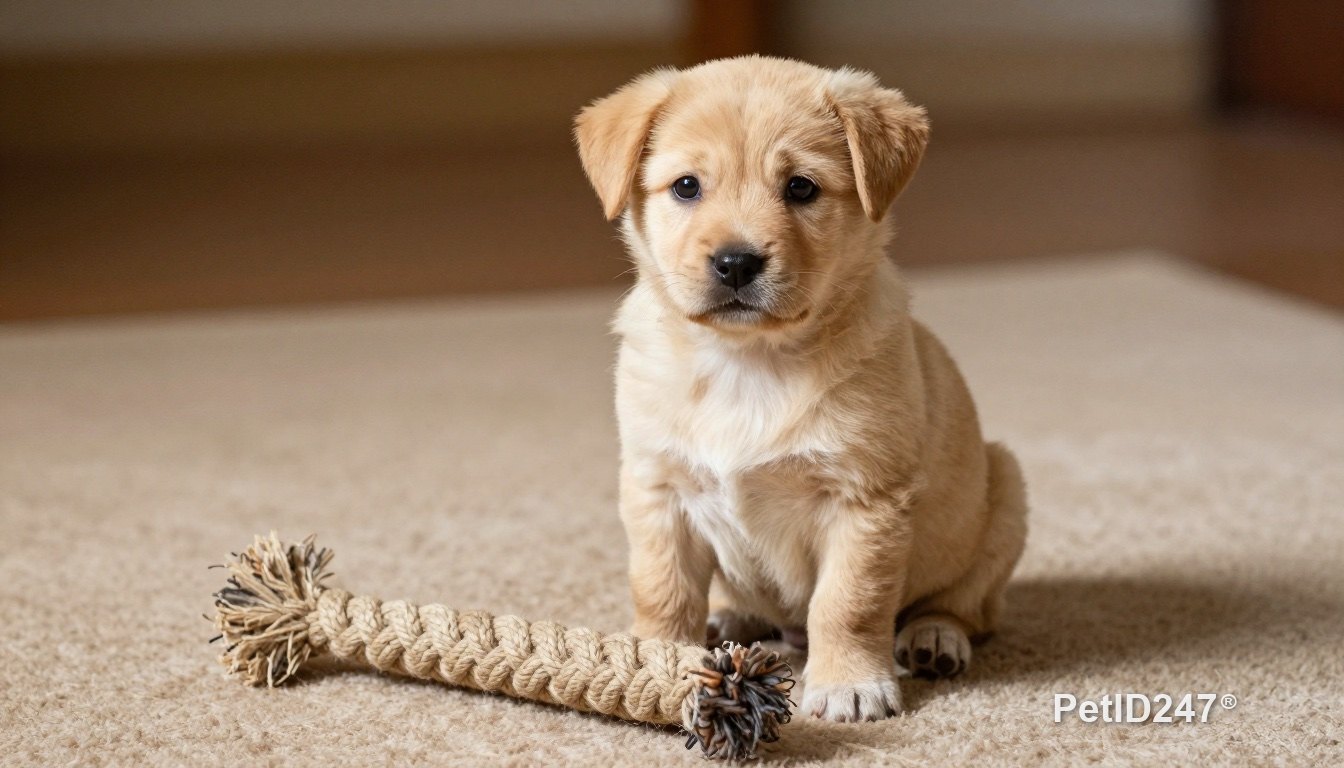
Offer a few toys in different materials: flexible rubber, braided rope, and toys you can stuff with food. Pick toys that suit your puppy's mouth, large enough not to be swallowed and sturdy enough not to break into small pieces. Avoid cooked bones, very hard items that can chip teeth, and toys with small parts that can come loose.
Rotate the toys every few days so your puppy doesn't get bored. A toy that has been put away and brought back often feels as exciting as a new one.
Redirect the moment you catch it
- When you see your puppy chewing something off-limits, calmly say a short word such as "no" or make a gentle sound to interrupt.
- Take the item away without a tug-of-war and without chasing, or your puppy will think it's a game.
- Immediately offer one of its chew toys.
- When your puppy chews the toy, praise it in a happy voice, give it a stroke or a small food reward.
Be consistent, and make sure everyone in the household does the same. Puppies learn through repetition, not from a single telling-off.
Biting hands during play
Puppies often nip hands and tug at trouser legs during play. When a bite is too hard, stop the game at once, pull your hand away and turn aside for a moment. Your puppy will gradually learn that hard biting ends the fun. Avoid wrestling with bare hands; use tug toys or toys you can throw instead.
What not to do
- Don't hit, shout or push the puppy's nose into the chewed item: puppies can't connect a punishment with something done earlier. They only learn to fear you or to chew when you're not around.
- Don't punish after the fact: if you only discover a ruined shoe after coming home, clear it up and store things more carefully next time.
- Don't give old shoes as toys: your puppy can't tell an old shoe from a new one.
- Don't ignore the need for exercise: a puppy that gets play, age-appropriate walks and food-finding games usually chews far less.
Most puppies chew much less once their adult teeth are in and they have been taught consistently. Some high-energy breeds may need more time and more activities.
When to see a vet
See a vet if your puppy swallows a foreign object, chews an electrical cord, or vomits, drools heavily, refuses food or seems to have a sore belly after chewing something unusual. Also ask your veterinarian if the gums bleed a lot, baby teeth don't fall out once the adult teeth have come in, or your puppy chews destructively and panics every time it is left alone. If your puppy bites people hard or growls when items are taken away, get early help from an experienced trainer who uses reward-based methods.
This article was prepared with the help of artificial intelligence tools and reviewed by the PetID247 editorial team before publication. It is for reference only and does not replace an examination by a veterinarian.