Indoor Rabbit Care: Housing, Hay and Play Space
AI-generated illustration
Indoor rabbits need roomy housing, unlimited hay and daily exercise time. How to set up the enclosure, a play area and a rabbit-proof home.
Rabbits are intelligent, affectionate pets that can live for many years with good care. But a rabbit is not an animal you simply shut in a small cage. Before bringing one home, you need roomy housing, a steady supply of hay and a safe area where your rabbit can run and hop.
Rabbit housing: the bigger, the better
Many store-bought cages are too small for a rabbit's real needs. An easy rule of thumb: your rabbit's living space should be big enough for it to take several hops in a row, stretch out fully when lying down and stand upright on its hind legs without its ears touching the roof.
Instead of a small cage, many owners choose a pen made from modular pet fencing, creating an area of a few square meters. This is a good option for many homes because it is easy to clean and well ventilated.
What the enclosure needs
- A flat, soft floor: avoid wire floors, which can cause sore, ulcerated feet. If the cage has a wire base, cover it with a mat or a wooden board.
- A litter tray: rabbits usually toilet in one fixed corner, so they can be litter trained. Use recycled paper pellets or paper bedding, and avoid clumping cat litter.
- A hay rack: place it right next to the litter tray, as rabbits like to eat hay while they toilet.
- A hiding place: a wooden box or cardboard box with two entrances. Rabbits are prey animals in the wild and need somewhere to hide to feel safe.
- A heavy water bowl or a water bottle: many rabbits find it easier to drink from a bowl. Change the water every day.
Hay: the foundation of every meal
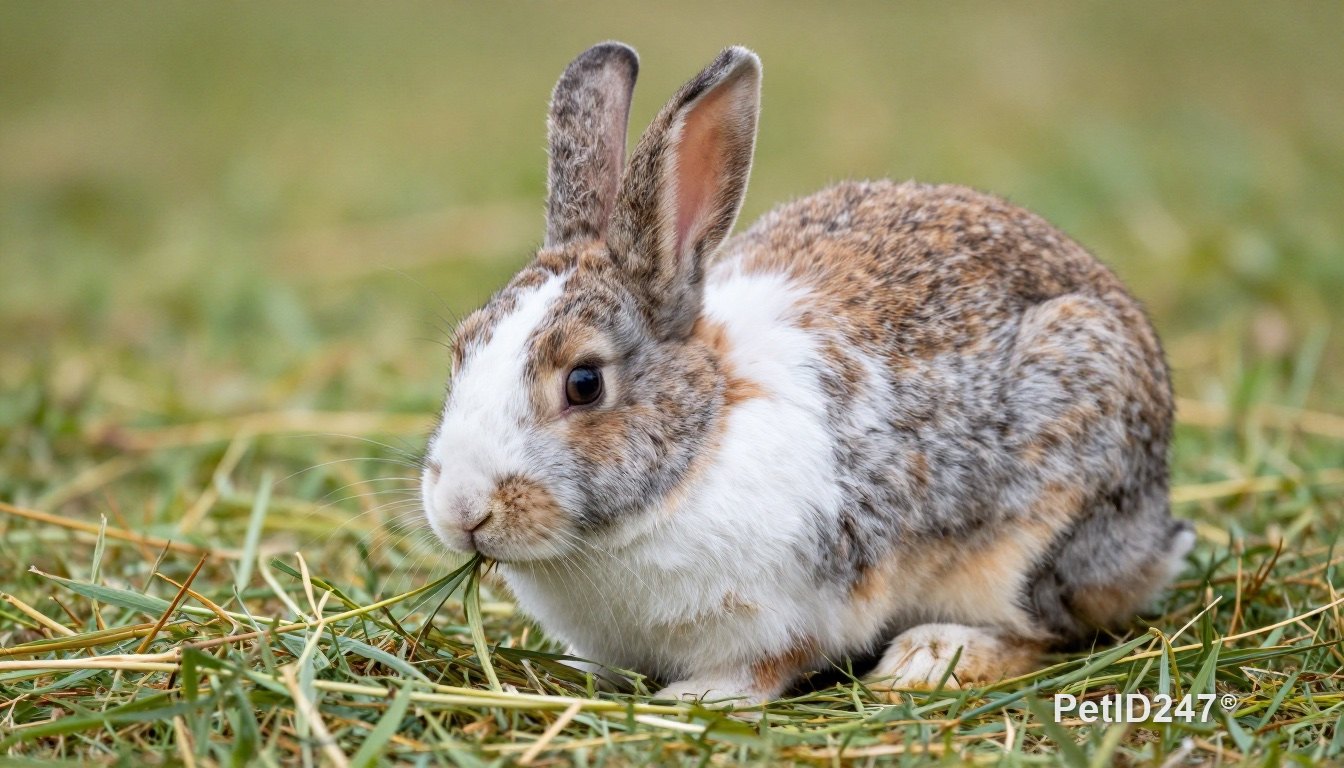
Hay must always be available, unlimited, day and night. Hay wears the teeth down evenly and keeps the gut moving. Rabbits that don't get enough hay are very prone to dental disease and digestive problems.
- Choose hay that is pale green, smells fresh and is free of dust and mold.
- Grass hay suits adult rabbits. Legume hay is richer in protein and calcium and is usually reserved for young rabbits or used on professional advice.
- Store hay somewhere dry and airy. Humid weather can quickly make hay moldy; throw out moldy hay immediately.
Leafy greens and a small amount of rabbit pellets add to the diet, but hay should still make up most of what your rabbit eats.
Play space and rabbit-proofing your home
Rabbits need time out of their enclosure to run and hop for several hours a day, ideally in the early morning and evening, when they are most active.
Rabbit-proofing
Rabbits have a natural urge to chew. Before letting your rabbit out, check the area:
- Cover or raise electrical cords and charging cables. A rabbit chewing through a live wire can get a dangerous shock.
- Move houseplants elsewhere, as many plants are toxic to rabbits.
- Protect wooden furniture legs, baseboards and carpet edges if you don't want them chewed.
- Block gaps behind cabinets and under beds where a rabbit could crawl in and get stuck.
- Store medicines, cleaning chemicals and rodent poison up high.
Simple toys
- Cardboard boxes with holes cut in them and paper tubes to make tunnels.
- Wicker baskets and unpainted wooden blocks to chew.
- Hide a few fresh herbs in the hay so your rabbit can forage for them.
- A box of shredded paper for digging.
Temperature and living environment
Rabbits tolerate cold fairly well but cope very poorly with heat. Hot, humid summers are a major challenge in many climates. Many guidelines suggest that around 18 to 24 °C (about 64 to 75 °F) is comfortable for rabbits, while above roughly 28 °C (about 82 °F) they are at risk of heatstroke (as a guide).
- Place the enclosure somewhere cool and airy, out of direct sunlight.
- Avoid placing it next to an air-conditioner outdoor unit, a stove or a west-facing window.
- On hot days, provide a towel-wrapped frozen water bottle or a cool ceramic tile for your rabbit to lie on.
- Keep the living area quiet and avoid sudden loud noises.
Rabbits are social animals. Many enjoy the company of another rabbit, usually as a neutered pair. Bonding needs to be done gradually, and you can ask your veterinarian for advice. If you keep a single rabbit, you will need to spend more time playing with it.
Summary
- Housing should be as roomy as possible, with a flat, soft floor, a hiding place and a litter tray.
- Clean hay should always be available and form the main part of the diet.
- Let your rabbit out daily to run and hop in a rabbit-proofed area.
- Keep the living space cool, out of the heat and quiet.
- Find a veterinary clinic experienced with rabbits in advance for general checkups and advice on vaccination and neutering.
This article was prepared with the help of artificial intelligence tools and reviewed by the PetID247 editorial team before publication. It is for reference only and does not replace an examination by a veterinarian.