Pregnant Cats and Caring for the Mother After Birth
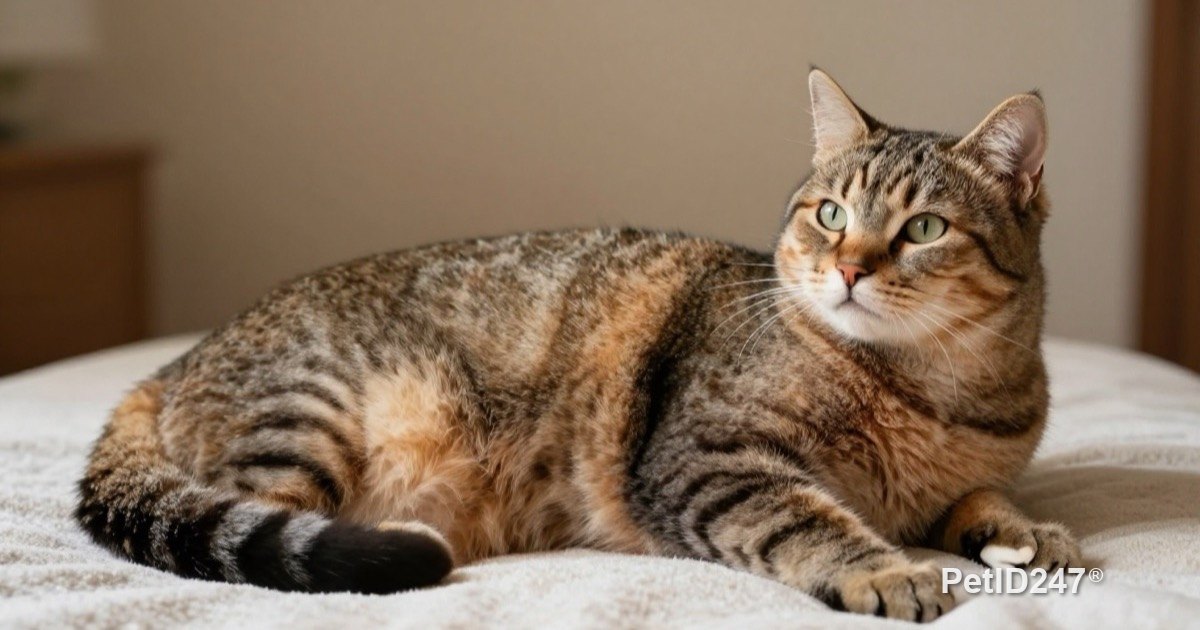
AI-generated illustration
From pregnancy to weaning, a mother cat needs good food, a quiet nest and close watching. Learn how to prepare and how to recognize the danger signs.
Cats usually give birth quite well on their own, but owners still play an important role: preparing a nest, feeding correctly and spotting problems early. This guide walks you through each stage, from pregnancy to the first few weeks after birth.
Recognizing pregnancy in cats
Pregnancy in cats usually lasts about 9 weeks, give or take a few days. Common signs include:
- Around the third week, the nipples become pinker and more prominent.
- The belly grows and the cat gains weight steadily from mid-pregnancy.
- More appetite, more sleep, and some cats become more affectionate.
- In the last few days, the cat looks for a hidden spot to nest.
Some cats vomit a little early in pregnancy. The surest way to know is a vet visit: your veterinarian can confirm pregnancy by ultrasound and check the mother's health. An X-ray late in pregnancy can estimate the number of kittens, which is very helpful for knowing when she has finished giving birth.
Care during pregnancy
Feeding
- In the first half of pregnancy, most cats eat their normal complete diet.
- From the second half, many veterinarians recommend gradually switching to kitten food, which has more energy and protein. Ask your vet how to switch and how much to feed.
- Offer several small meals as the belly grows, and always provide clean water.
- Don't add calcium or vitamins on your own. Incorrect supplementation can cause harm both in pregnancy and while nursing.
Medicines and vaccinations
Never give a pregnant cat any medication on your own, including dewormers or flea and tick products. All medicines and any vaccinations during pregnancy must be given only as directed by your veterinarian.
Preparing a nesting box
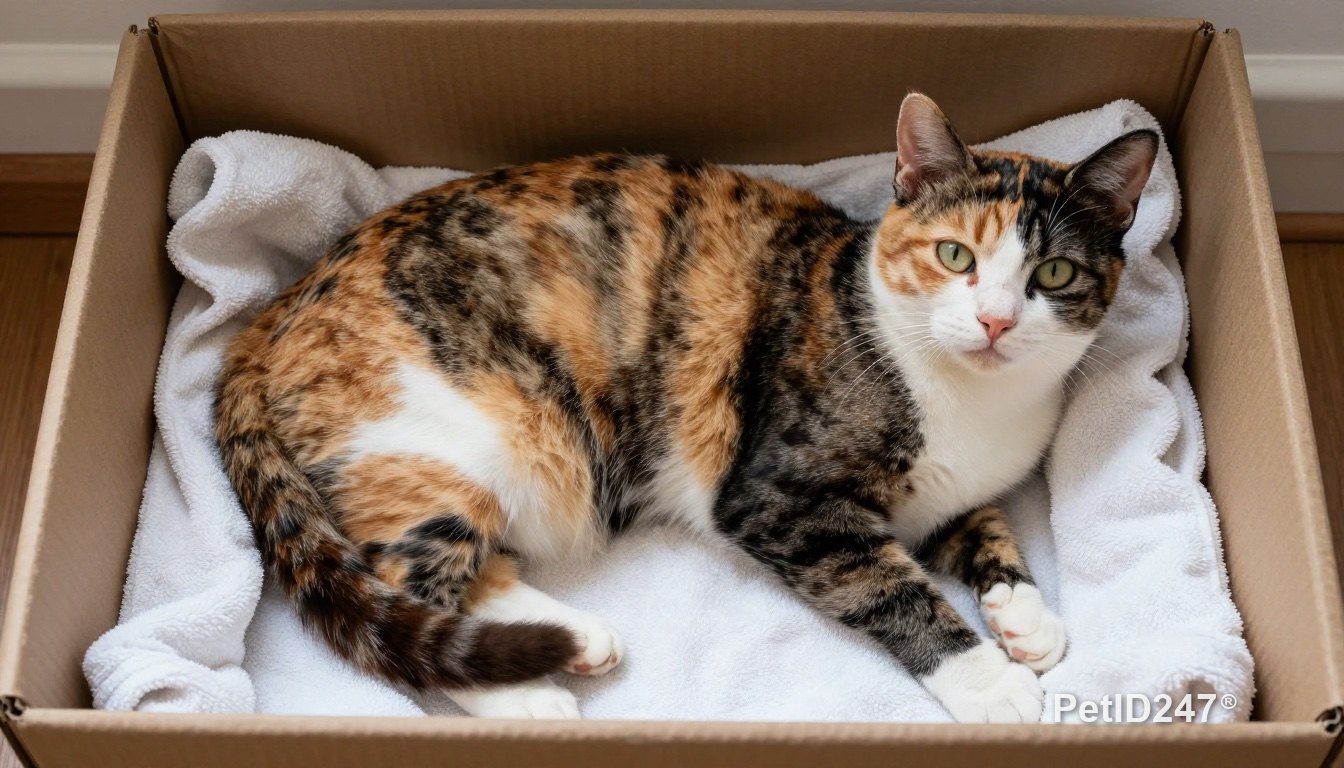
About two weeks before the due date, prepare a cardboard box or bed with moderately high sides, lined with clean towels that are easy to change. Put it in a quiet, warm corner with little foot traffic. Let your cat explore it in her own time; don't force her in. If she picks another safe spot, you can move the box there.
When labor begins
About a day before birth, cats often become restless, go in and out of the nest, lick their genital area, and may stop eating. Once she starts pushing, kittens are born one at a time, usually each followed by a placenta. The mother licks off the membranes and chews through the umbilical cord.
- Stay quiet, watch from a distance, and don't lift the mother out of the nest.
- The gap between kittens can range from a few minutes to over an hour. Some cats take a long rest partway through before continuing.
- Count the kittens and, if you can, the placentas.
- If the mother hasn't broken the membrane on a kitten after about a minute, gently tear it away from the face and wipe the nose and mouth with a clean cloth.
Caring for the mother after birth
- Food: nursing takes a lot of energy. She usually stays on kitten food; keep food and fresh water right next to the nest.
- Clean nest: change soiled bedding quickly while the mother steps out.
- Quiet: keep visitors and other pets away. A disturbed mother may move her kittens elsewhere.
- Check the mammary glands: gently feel for any area that is hard, hot or red.
- Watch the kittens: all of them should nurse and grow steadily. Weighing them daily on a kitchen scale helps spot a weak kitten early.
A cat can come back into heat just a few weeks after giving birth. Ask your vet about the right time to spay the mother.
When to see a vet
Call your veterinarian right away if:
- She strains hard continuously for about 20–30 minutes without producing a kitten, or a kitten appears stuck at the birth canal.
- She rests for more than about 2 hours when you know there are still kittens inside.
- There is dark green-black discharge or a lot of bright red blood before the first kitten.
- She is past her due date without giving birth, or she is exhausted or feverish.
- After birth, the mother trembles, has seizures, walks unsteadily or pants heavily. This may be low blood calcium and is an emergency.
- There is foul-smelling vaginal discharge, swollen hot red mammary glands, or she stops eating or abandons her kittens.
- Kittens aren't nursing, cry constantly, feel cold or aren't gaining weight.
This article was prepared with the help of artificial intelligence tools and reviewed by the PetID247 editorial team before publication. It is for reference only and does not replace an examination by a veterinarian.