Bearded Dragon Care: Enclosure, Temperature and Diet
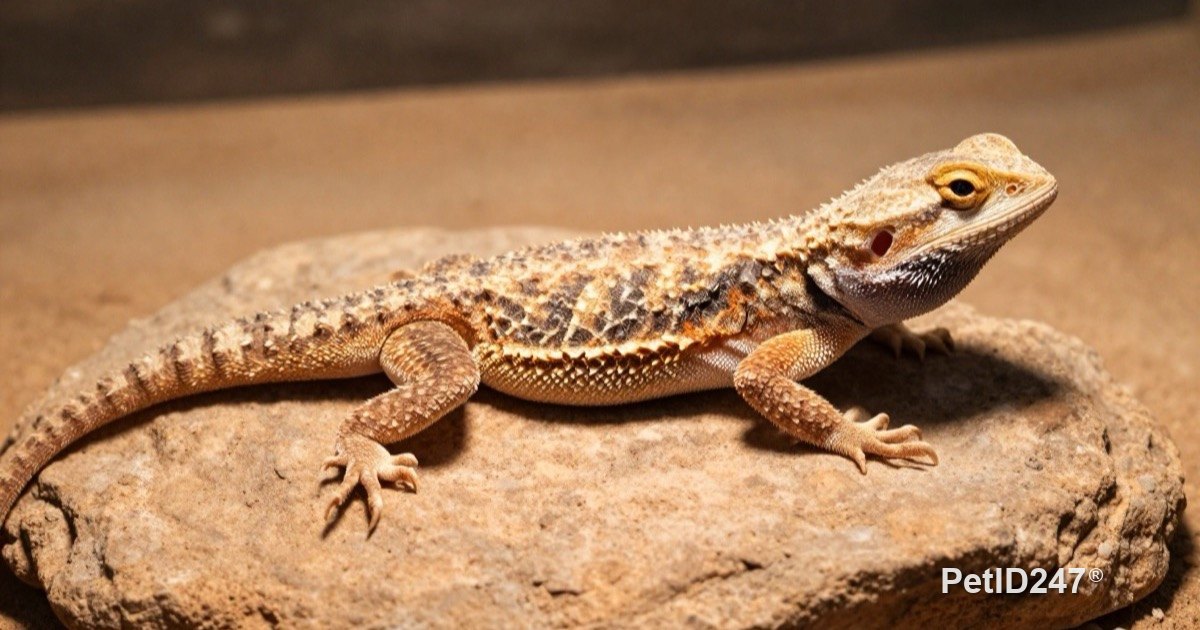
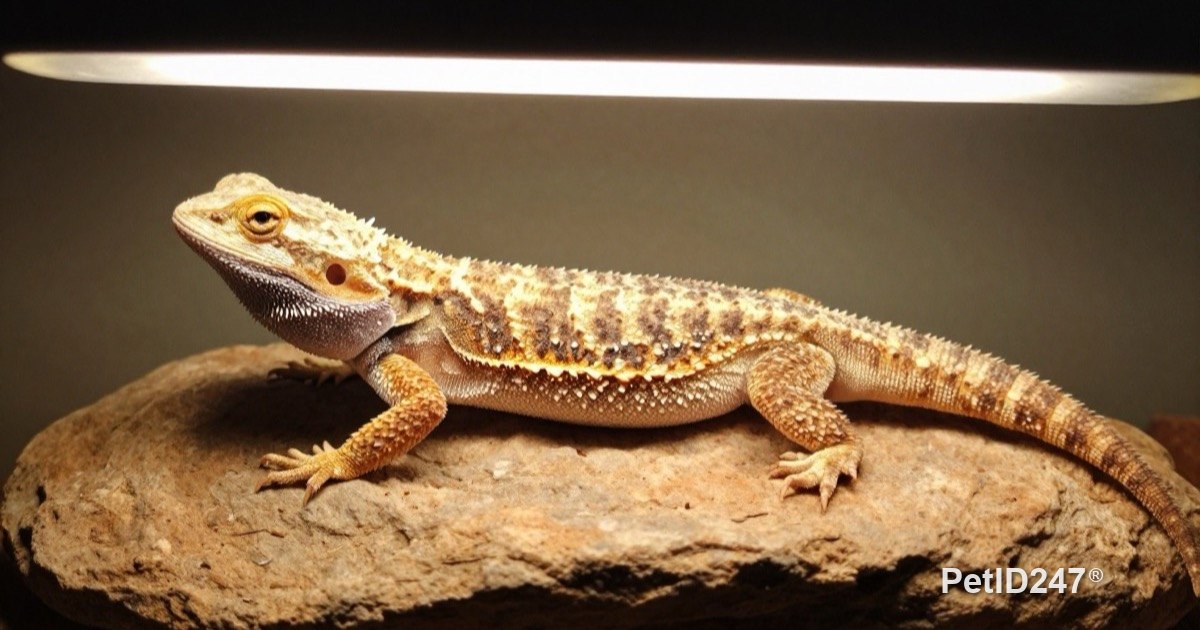
AI-generated illustration
Bearded dragons are calm, curious and fairly friendly, but they need a large enclosure, a hot basking spot, UVB lighting and a diet that changes with age. Here are the basics.
The bearded dragon is one of the most popular pet reptiles, thanks to its calm nature, curiosity and tolerance of handling. However, it comes from hot, dry regions and needs high temperatures, strong light and a balanced diet. Without any one of these, a bearded dragon can easily fall ill.
Before you get a bearded dragon
- Size and lifespan: adults are usually around 40–60 cm long including the tail and can live around 10–15 years with good care, as a guide.
- Legal sourcing: only buy captive-bred animals from a legal source with clear paperwork. Never buy animals taken from the wild or of unknown origin. Follow the rules where you live.
- Never release one: bearded dragons cannot survive in the wild outside their native range and may carry diseases to local animals. If you can no longer keep yours, find a responsible new home.
- One dragon per enclosure: bearded dragons don't need company. Housing them together, especially two males, often leads to competition, biting and stress.
The enclosure
Bearded dragons are active and grow fairly quickly. A common guideline for an adult is an enclosure roughly 120 cm long and about 60 cm wide and tall. A front-opening enclosure makes care easier; it should be well ventilated with a secure top.
- Substrate: for juveniles, use a flat, easy-to-clean surface such as a liner or tiles to reduce the risk of swallowing substrate and getting an intestinal blockage. If you want a loose substrate for an adult, ask a reptile veterinarian which type is suitable.
- Basking spot: a flat stone or log placed near the heat lamp for the dragon to climb onto.
- Hide: at least one hide on the cool side.
- Climbing items: sturdy branches and wood, arranged so the dragon can't climb too close to the lamp and get burned.
Temperature and lighting
Temperature gradient
Bearded dragons need a range of temperatures in the enclosure to regulate their body heat. Common guidelines for an adult:
- Basking spot: approximately 38–42°C on the basking surface.
- Warm side: approximately 30–33°C.
- Cool side: approximately 24–28°C.
- At night: it can drop to around 20–24°C; a light-emitting heat source is usually not needed at night.
Control heating with a thermostat and measure with thermometers in several spots. Measure the basking surface with a surface thermometer.
UVB lighting
Bearded dragons need UVB light to make vitamin D3, which lets them absorb calcium. Lack of UVB is the leading cause of metabolic bone disease. The lamp should cover most of the enclosure's length, must not be blocked by glass or plastic, and should be replaced as recommended on the product label, because UVB output fades even while the lamp still shines. A light cycle of around 12–14 hours a day is a common guideline. See our article on UVB for reptiles for more on setting up lighting.
Diet at each life stage
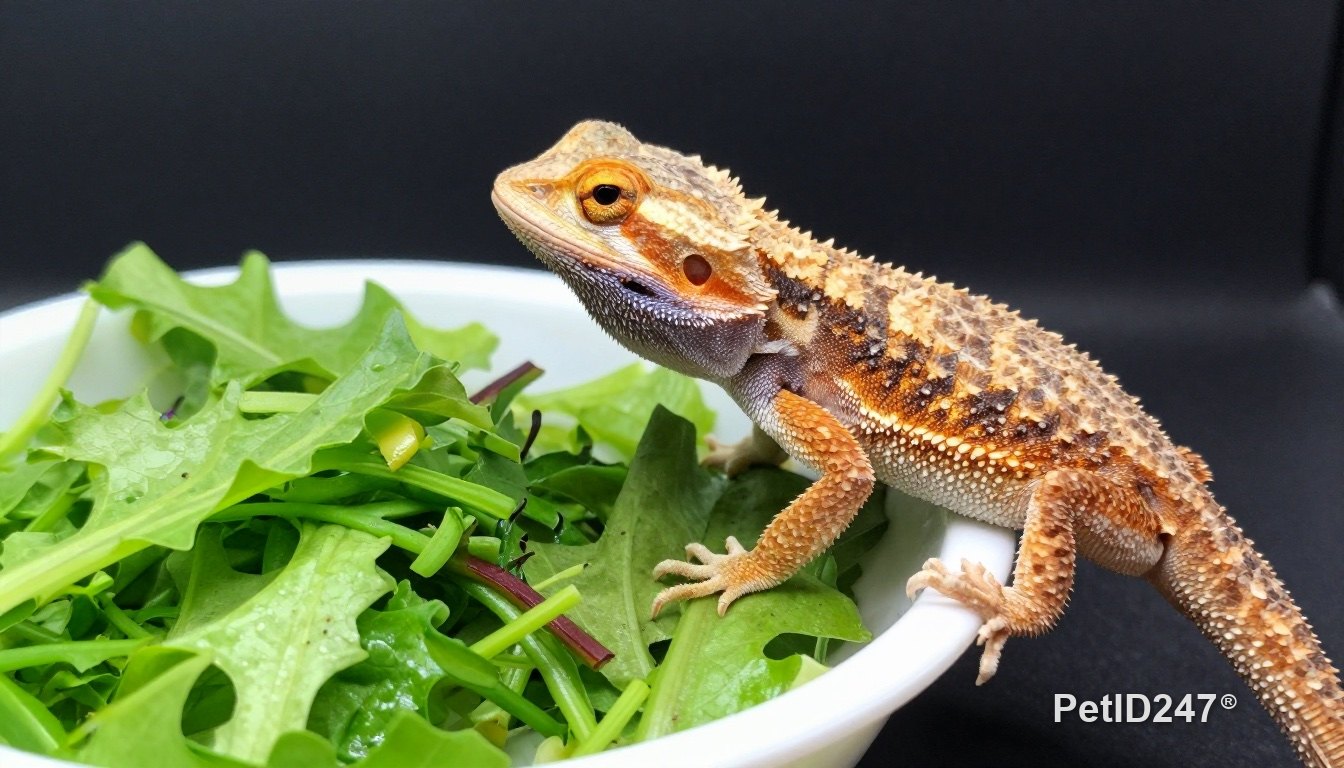
Bearded dragons eat both insects and greens, but the balance changes with age:
- Juveniles: need plenty of protein to grow, so insects make up most of the diet, with some finely chopped greens. Feed several times a day.
- Adults: greens and a little fruit make up most of the diet, with insects only a small part. Too many insects easily leads to obesity.
Food suggestions
- Insects: crickets, feeder roaches and various worms from clean, farmed sources. Insects should be no larger than the space between the dragon's eyes. Never feed wild-caught insects, which may carry pesticides or parasites.
- Greens: dark leafy greens, washed and chopped to bite size. Pale lettuces are mostly water with little nutrition, so offer only small amounts.
- Avoid: avocado, fireflies, human food and sweets.
Dusting insects and greens with calcium and vitamin powder is necessary, but which product and how often depends on the dragon's age and lighting setup. Follow your reptile veterinarian's directions and read the product label carefully.
Water and hygiene
Provide a shallow water dish and change it daily. Many bearded dragons rarely drink from a dish and get most of their water from greens. Remove droppings and leftover food every day and deep-clean the enclosure regularly. Wash your hands with soap after handling your dragon or cleaning the enclosure, because reptiles can carry Salmonella bacteria.
Summary
A bearded dragon needs a large enclosure with a hot basking spot, a cool side to rest, good-quality UVB lighting and thermostat-controlled heat. Juveniles eat mostly insects; adults eat mostly greens. Only buy from a legal source with paperwork, and never release one. If your dragon stops eating for a long time, is lethargic, has trembling legs, a soft jaw or slow growth, see a veterinarian experienced with reptiles.
This article was prepared with the help of artificial intelligence tools and reviewed by the PetID247 editorial team before publication. It is for reference only and does not replace an examination by a veterinarian.