Why Cats Scratch the Sofa and How to Redirect Them
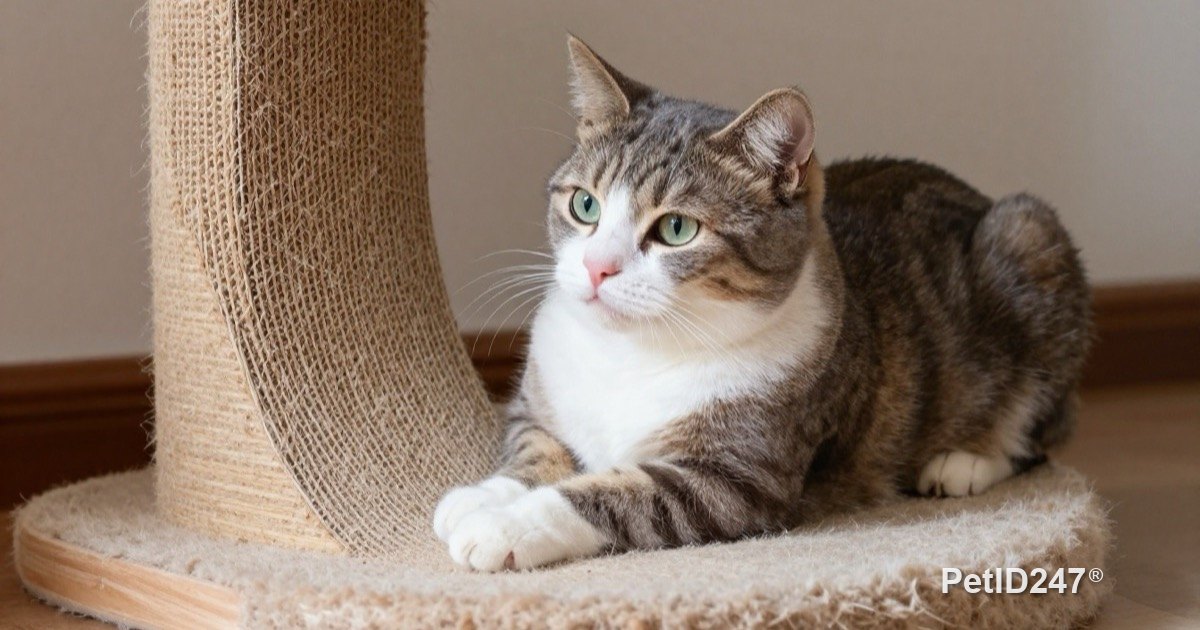
AI-generated illustration
Scratching is instinct, not mischief. Learn why cats scratch and where to place a scratching post so your sofa survives and your cat stays happy.
A brand-new sofa shredded within a few weeks is a familiar story in many cat households. The good news: your cat is not trying to ruin your furniture. Scratching is a natural need, and your job is simply to offer a scratching spot that is more appealing than the sofa.
Why cats need to scratch
Scratching is about more than sharpening claws. This one behavior meets several needs at once:
- Claw maintenance: scratching sheds the worn outer layer of the claw and exposes the sharp new claw underneath. That is why you often find little crescent-shaped claw sheaths near your cat's favorite scratching spot.
- Marking territory: cats have scent glands between their toes. When they scratch, they leave both visible marks and a personal scent that humans cannot smell.
- Stretching: cats often scratch right after waking up to stretch their back, shoulders and front legs.
- Releasing emotion: cats tend to scratch when they are excited, when their owner comes home, or when they feel stressed.
The sofa gets chosen because it ticks almost every box: tall, sturdy, doesn't wobble, has fabric that is easy to grip, and sits in the center of the home where the family gathers. Understanding this tells you exactly what a scratching post needs to offer.
Choose a scratching post your cat will actually like
Many people buy a scratching post only to watch their cat ignore it. Usually the post just isn't what the cat wants. Check these points:
- Tall enough: cats like to stretch out fully when they scratch. An upright post should be taller than your cat's body at full stretch; as a guide, roughly 70–80 cm (about 28–32 inches) or more for an adult cat.
- Really sturdy: if a post wobbles or tips over even once, your cat may get scared and never come back. The base should be heavy and wide.
- The right material: tightly wound natural-fiber rope, corrugated cardboard, soft wood or coarse-weave carpet. Every cat has its own preference, so try a few.
- Vertical and horizontal options: some cats like scratching upright surfaces like a sofa, while others prefer scratching a rug on the floor. Watch how your cat likes to scratch.
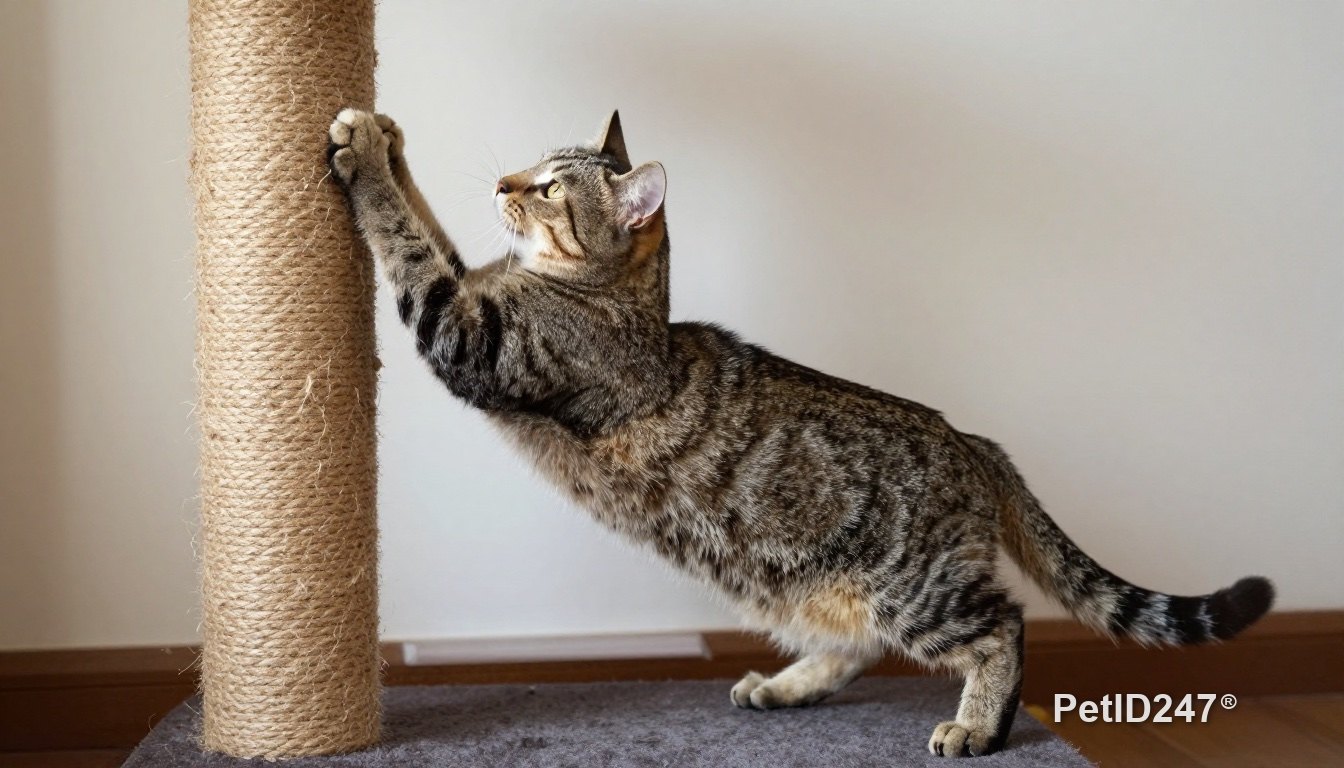
How to move your cat from the sofa to the post
Put the post in the right place
Location matters more than price. Place the scratching post right next to where your cat is already scratching, beside the damaged corner of the sofa. Add another post near where your cat sleeps, since cats often scratch as soon as they wake up. Don't hide the post in a quiet corner: cats want to mark where people pass by. Once your cat is using it, you can move the post gradually, a short distance at a time.
Make the sofa less attractive
While your cat is learning, temporarily make the old scratching spot unpleasant:
- Cover the corner of the sofa with a smooth throw or a plastic sheet.
- Put double-sided tape on the areas your cat scratches. Most cats dislike the sticky feeling under their paws.
- Wipe down old scratch marks to reduce your cat's scent marking.
Avoid using essential oils or strong-smelling sprays to deter your cat. Some essential oils can harm cats when inhaled or when they get on the fur and are licked off.
Reward right away
Every time your cat uses the post, praise them gently or offer a small treat. You can lure your cat to the post by dragging a wand toy across it, or sprinkle a little catnip on top if your cat responds to it. If you catch your cat scratching the sofa, don't shout or hit. Just calmly carry them to the nearby post. Punishment only makes your cat afraid of you and more likely to scratch when no one is around.
Nail trimming and what to avoid
Regular nail trims reduce the damage if your cat does scratch furniture. Trim only the clear tip of the claw and avoid the pink part inside, which contains blood vessels and nerves. If you are not confident, ask your veterinarian or an experienced groomer to show you how.
Things you should avoid:
- No declawing surgery. Declawing actually removes the last bone of each toe. It can cause long-lasting pain, change how the cat walks and lead to toileting outside the litter box. Many veterinary associations around the world oppose the procedure when there is no medical reason for it.
- No physical punishment and no spraying your cat with water.
- Don't throw out the scratching post just because it looks worn. To your cat, an old post full of their own scent is the most attractive one. Replace it only when it is no longer stable.
Soft nail caps glued onto the claws are a temporary option in some places. If you want to try them, ask your veterinarian about safe use and watch that your cat doesn't chew them off and swallow them.
Summary
- Scratching is an instinct for claw care, scent marking and stretching. You can't stop it completely, and you shouldn't try.
- A good scratching post is tall, sturdy, made of a material your cat likes and placed right next to where your cat already scratches.
- Temporarily cover the sofa, reward your cat for using the post, and never shout or hit.
- Trim nails regularly and avoid declawing surgery.
With a few weeks of patience, most cats will choose the post over the sofa. If your cat suddenly starts scratching much more than usual, along with toileting in the wrong place or a change in temperament, consider stress or a health problem and talk to your veterinarian.
This article was prepared with the help of artificial intelligence tools and reviewed by the PetID247 editorial team before publication. It is for reference only and does not replace an examination by a veterinarian.