Playing With Indoor Cats: Games and Toys That Work
AI-generated illustration
Indoor cats need daily play to stay healthy and out of mischief. Here are play ideas based on hunting instinct, safe toys and easy DIY toys.
Indoor cats are safer than cats that roam outside, but they get bored easily, gain weight and develop annoying habits like scratching furniture, ambushing your ankles or meowing at night. Playing the right way every day is a simple way to keep your cat active, burn off energy and strengthen your bond. You don't need expensive toys, just an understanding of how cats like to play.
Why cats need play
- Satisfies the hunting instinct: stalking, chasing, pouncing and biting are natural cat behaviors. Without an outlet, your cat will “hunt” your hands, feet or curtains.
- Maintains weight and muscle: indoor cats move less and gain weight easily.
- Reduces stress: play eases anxiety and can reduce some stress-related behavior problems such as house soiling.
- Builds your bond: cats that play with their owners tend to be bolder and more trusting.
Play like a hunt
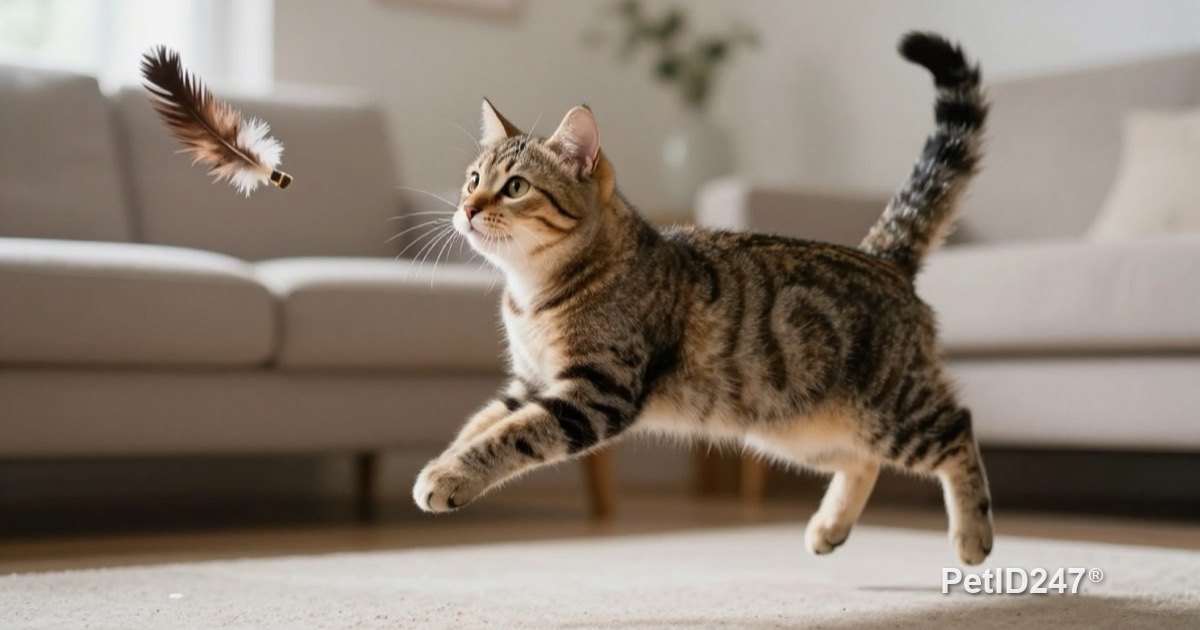
The most effective games are ones where you move a toy so it behaves like real prey.
- Start slowly: let the toy peek out from behind a chair or creep across the floor like a mouse, so your cat can stalk it.
- Move away from your cat: real prey runs away; it never charges at the hunter's face.
- Vary the rhythm: fast, then still, then darting out of sight.
- Let your cat catch it: allow a few successful pounces, especially at the end of the session, so your cat feels successful.
- Wind down gently: slow the toy down as if the prey is tired, then give a small meal or treat.
As a guide, many adult cats prefer several short play sessions of about 5–15 minutes a day rather than one long one. Kittens usually play more, and senior cats more gently.
Toys worth having
Toys for interactive play
- Feather wands and string wands: the number one toy for hunt-style play. Put them away after each session.
- Light pointers: cats love chasing the dot, but they can never catch it, which can be frustrating. Finish by landing the light on a real toy your cat can pounce on, and never shine it in your cat's eyes.
Toys for solo play
- Fabric mice, small balls with bells, scrunched-up paper balls.
- Food puzzle toys: your cat has to push and paw to get the kibble out, which slows eating and engages the mind.
- Scratching posts and pads for claw care and stretching.
- Catnip toys; note that not every cat responds to catnip.
DIY toys
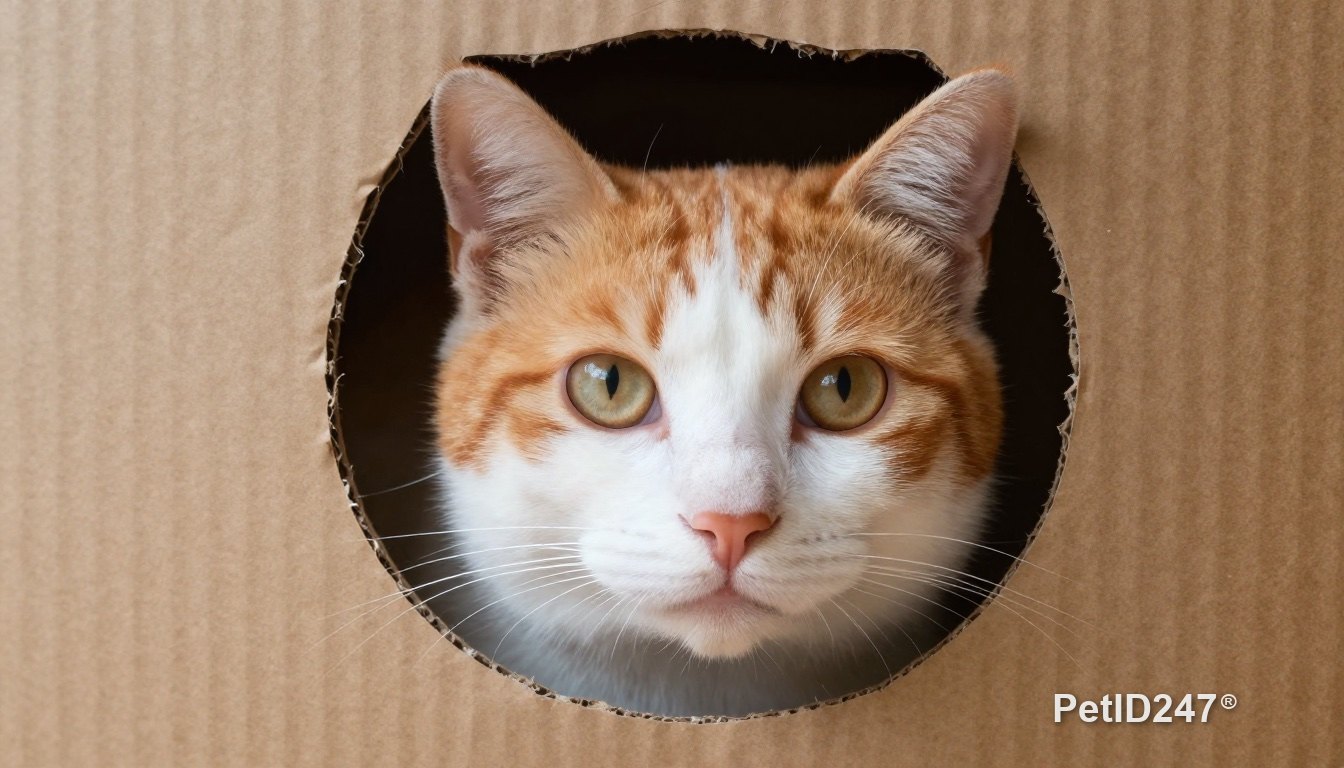
- A cardboard box with a few holes cut in it as a “den” for hiding and ambushing.
- A paper bag with the handles cut off for your cat to crawl into.
- A toilet paper tube folded shut at both ends with a few pieces of kibble inside to roll around.
- Kibble hidden in a few places around the house so your cat can go “hunting”.
Keeping play safe
- Put away string, thread, yarn, ribbon and hair ties after play. Swallowed string-like items can block or tear a cat's intestines, which is very dangerous.
- Check toys regularly and throw away any that are torn, shedding feathers or losing small parts.
- Don't use your hands or feet as toys for your cat to bite and scratch.
- Don't use plastic bags, rubber bands or safety pins as toys.
- Rotate toys: put some away and swap a few each week so they always feel new.
- Add vertical space such as shelves, cat trees and a window perch, and make sure windows and balconies are safely screened.
Multi-cat homes
Shy cats often hold back for bolder ones. Play with each cat separately, or use two wands at once so every cat gets a turn.
Summary
Indoor cats need daily play to stay fit, reduce stress and stay out of mischief. Play hunt-style with a wand toy, move the toy away from your cat, let it make the catch at the end, then feed. Combine solo toys, DIY toys and regular rotation. Always put string, thread and yarn away after play so your cat can't swallow them.
This article was prepared with the help of artificial intelligence tools and reviewed by the PetID247 editorial team before publication. It is for reference only and does not replace an examination by a veterinarian.