Apartment Cats: Balcony and Window Safety
AI-generated illustration
Falls from balconies and windows are common accidents for apartment cats. How to install netting, check escape routes and enrich your home so your cat lives safely up high.
Many people believe cats are so agile and well balanced that they never fall. In reality, cats falling from apartment balconies and windows is a fairly common accident that can cause broken legs, chest injuries, a fractured jaw or death. The good news is that almost every case can be prevented if you prepare your home from the start.
Why apartment cats fall
- Hunting instinct: a passing bird, butterfly or lizard can make a cat leap after it, forgetting how high up it is.
- Being startled: a sudden bang, thunder or the sound of a drill can make a cat jump wildly.
- Dozing on railings and sills: cats love sunbathing in narrow spots, and simply rolling over can make them slip and fall.
- Young or unneutered cats: they are more energetic and curious, and more likely to try to get outside.
- Netting that isn't strong enough: ordinary insect screens can't hold a cat's weight or withstand its claws.
A fall from a low floor is not necessarily safe. Cats can be seriously injured from any height.
Making your balcony cat-safe
Netting or barrier frames
- Use netting designed for pets or sturdy safety netting fixed to a solid frame. Avoid thin insect mesh.
- Cover every gap: above the railing, the gap below it, both sides and even the top if your cat can climb up.
- Gaps between railing bars also need covering, since cats, especially kittens, can squeeze through very narrow spaces.
- Check the netting regularly, about once a month, for tears, loose ties or material made brittle by wind and sun.
Before installing netting or frames, find out about and follow your building management's rules and the regulations where you live, especially fire safety and emergency exit requirements.
Arranging furniture
- Don't place chairs, tables, plant pots or a washing machine next to the railing, as your cat will use them as launch pads.
- Don't let your cat onto the balcony before the netting is in place, even if someone is sitting nearby. Your cat is faster than your reflexes.
- Any plants on the balcony should be safe for cats.

Windows and doors
- Windows: install sturdy screens or restrictors that limit how far the window opens so your cat can't get through. Tilt-open windows and partly open sliding windows can also trap a cat.
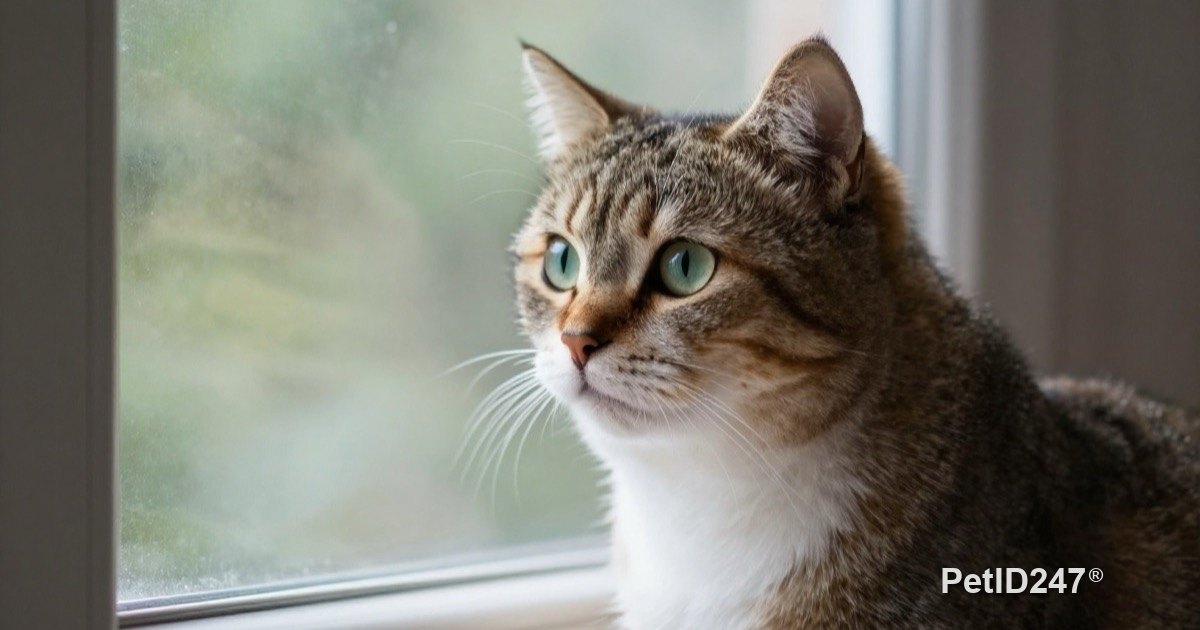
- Window sills: if your cat loves watching the world outside, set up a resting spot by a screened window rather than leaving it open.
- Front door: cats can slip out into the hallway, stairwell or elevator when you open the door for a delivery. Make a habit of checking where your cat is before opening the door. An extra gate at the entrance can help.
- Vents and utility boxes: seal any gaps your cat could crawl into.
Fit your cat with a collar showing your contact details, using a breakaway safety buckle that releases if it gets caught, and consider microchipping on your veterinarian's advice. If your cat does get out, your chances of finding them will be much higher.
Keeping your cat happy in a small space
A cat whose needs are met indoors is less likely to try to get out:
- Make use of height: climbing shelves, cat trees and wall-mounted perches for climbing and watching.
- Provide cozy hiding spots such as cardboard boxes or fabric caves.
- Play with your cat a few times a day, about 10–15 minutes each time, using wand toys that mimic prey.
- Feed with food-dispensing toys, or hide food for your cat to find.
- Grow a pot of cat-safe grass for your cat to nibble.
- Keep the litter box in a quiet spot and scoop it daily so your apartment doesn't smell, which also helps keep good relations with the neighbors.
When to see a vet
If your cat falls from a height, take them to a vet immediately, even if they seem able to walk. Cats are very good at hiding pain, and some internal injuries, such as air in the chest or internal bleeding, only become obvious after a few hours.
- Move your cat gently, place them on a towel or a flat board and put them in a carrier, keeping twisting of the body to a minimum.
- Don't give food, water or any pain medicine on your own.
- Danger signs: fast or open-mouth breathing, bleeding from the nose or mouth, pale gums, limping, being unable to stand, a bleeding chin or broken teeth.
Sturdy netting costs far less than an emergency vet visit. Get your balcony and windows ready before you bring a cat home to your apartment.
This article was prepared with the help of artificial intelligence tools and reviewed by the PetID247 editorial team before publication. It is for reference only and does not replace an examination by a veterinarian.